-
Bus, Mini Van
-
3 Stars Hotels & Camping
-
5,895 metres
-
Kilimanjaro (JRO)
-
Jan-Mar, June-Oct & Dec
-
Trekking, Hiking
-
All meals during the trek
-
English, Spanish, French, Chinese
-
Easy to Challenging
-
2-20
-
12
-
75
Overview
The Lemosho Route is a beautiful and smart way to climb Mount Kilimanjaro. It’s one of the most scenic paths and doesn’t get as crowded. The journey takes 8 days, allowing for a gentle ascent. This slower pace helps your body adjust to the altitude properly, increasing your chances of making it all the way to the summit.
- Departure and Return Place: Moshi Town to Lemosho Gate and then back to Kilimanjaro International Airport (Google Map)
- Departure Time: Please be ready by 8:15 AM for a prompt departure at 9:30 AM.
- Return Time: Approximately 10:30 AM on the last day.
- Dress Code: Casual. Comfortable athletic clothing, hiking shoes, a hat, cold cold-weather jacket, gloves, pants, and spare clothing.
- Accommodation: Two nights of accommodations based on Bed and Breakfast at a 3-star hotel (upgrades on request).
- Extensions: Trip Extensions are available on request.
- Trip Availability: All year round.
Trekking Highlights
- Arrival: Arrival Day
- Day 1: Trekking from Lemosho Gate (2,200 M) to Mti Mkubwa Camp (2,780 M)
- Day 2: Trekking from Mti Mkubwa Camp (2,780 M) to Shira 1 Camp (3,505 M)
- Day 3: Trekking from Shira 1 Camp (3,505 M) to Shira 2 Camp (3,900 M)
- Day 4: Trekking from Shira 2 Camp (3,900 M) to Lava Tower (4,630 M) and Descent to Barranco Camp (3,960 M)
- Day 5: Trekking from Barranco Camp (3,960 M) to Karanga Valley Camp (4,035 M)
- Day 6: Trekking from Karanga Valley Camp (4,035 M) to Barafu Camp (4,640 M)
- Day 7: Ascend to Uhuru Peak (5,895 M) and Descend to Barafu Camp (4,640 M) then to Millennium Camp (3,820 M)
- Day 8: Descend from Millennium Camp (3,820 M) to Mweka Gate (1,650 M)
- Dparture: Departure Day
Itinerary
When you arrive at Kilimanjaro International Airport (JRO), a representative from Bundi Travel will meet you and transfer you to a hotel in Moshi town. The hotel has everything you need for a comfortable stay, like nice rooms, hot water, friendly staff, a pool, and Wi-Fi. You’ll spend your first night there. If you arrive at the Jomo Kenyatta International Airport (JKIA) in Nairobi, Kenya, instead, we’ll pick you up and bring you to Moshi by shuttle bus. In the evening, there will be a meeting with the guides to help you get ready for the climb the next day.
Note: Check-in starts at 2:00 PM.
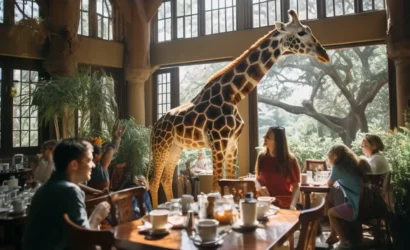
Stay two nights with breakfast or half board at Panama Garden Resort, Kilimanjaro Wonders Hotel, Shose Farmhouse and Chalets, Brubru Lodge, or Parkview Inn.
In the morning, your guide and a mountain support team will meet you at the hotel for another briefing before you travel by vehicle (approximately 3-4 hours) to the western entrance of Kilimanjaro National Park at Lemosho Gate (2,100 m). After a brief process to secure climbing permits and register with the search and rescue service, the group will begin the trek to the first campsite, Mti Mkubwa Camp (2,780 m). Raincoats are essential for this day since you’ll be traversing the rainforest. Upon arrival at the camp, our experienced mountain crew will have set up tents and prepared lunch.
Elevation Change: Londorossi Gate (2,100 m) to Mti Mkubwa Camp (2,780 m)
Hiking Distance: Approximately 6 km
Habitat: Rainforest
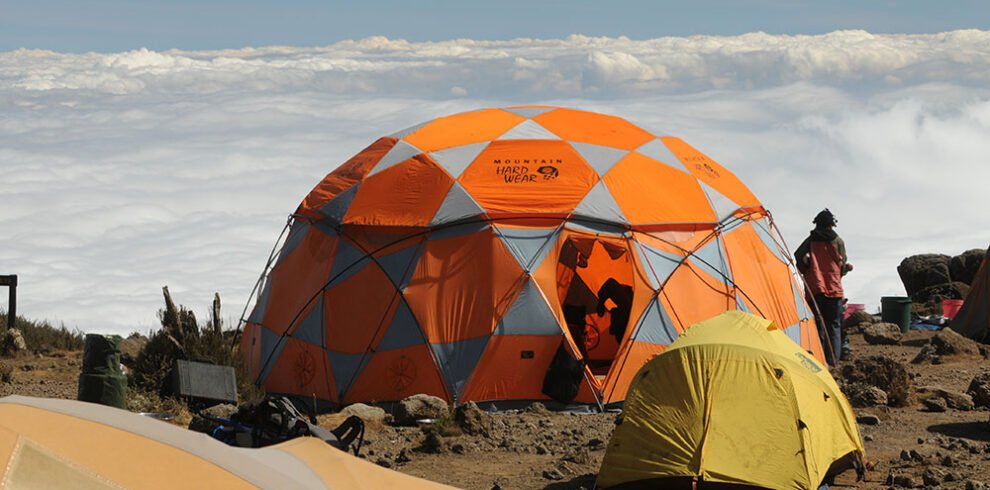
High altitude camping on Mount Kilimanjaro, at Mti Mkubwa Camp, located at an altitude of 2,780 meters.
Today, you will trek across a plateau of grassy moorland and heather scattered with volcanic rock formations. Our destination for today is the Shira 1 Camp, from where there are often views of Kibo Peak floating on the clouds. We gain a reasonable amount of altitude today, and parts of the route are fairly steep.
Distance covered: 8.5km / 5.3mi
High altitude camping at Shira 1 Camp, located at an altitude of 3,505 meters
Far far away, behind the word mountains, far from the countries Vokalia and Consonantia, there live the blind texts.
Separated they live in Bookmarksgrove right at the coast of the Semantics, a large language ocean. A small river named Duden flows by their place and supplies it with the necessary regelialia.
High altitude camping at Shira 2 Camp, located at an altitude of 3,900 meters.
Even the all-powerful Pointing has no control about the blind texts it is an almost unorthographic life One day however a small line of blind text by the name of Dan decided to leave for the far World of Grammar.
High altitude camping at Barranco Camp, located at an altitude of 3,960 meters.
The Big Oxmox advised her not to do so because there were thousands of bad Commas, wild Question Marks and devious Semikoli, but the Little Blind Text didn’t listen.
High altitude camping at Karanga Camp, located at an altitude of 4,035 meters.
When she reached the first hills of the Italic Mountains, she had a last view back on the skyline of her hometown Bookmarksgrove, the headline of Alphabet Village and the subline of her own road, the Line Lane. Pityful a rethoric question ran over her cheek.
High altitude camping at Barafu Camp, located at an altitude of 4,640 meters.
High altitude camping at Millennium Camp, located at an altitude of 3,820 meters.
Stay two nights with breakfast or half board at Panama Garden Resort, Kilimanjaro Wonders Hotel, Shose Farmhouse and Chalets, Brubru Lodge, or Parkview Inn.
| Number of People | Price in USD |
|---|---|
| 1 | $2,450 |
| 2 | $2,370 |
| 3 | $2,300 |
| 4 | $2,280 |
| 5 | $2,240 |
| 6 | $2,200 |
| 7 | $2,150 |
| 8 | $2,100 |
| 9 | $2,050 |
| 10 People and above | $2,000 |
The Cost Includes
- All transportation in destination location
- Hotel accommodations, before and after the trek
- All government taxes and park entrance fees
- Airport arrival and departure transfers
- All meals while on the mountain
- Tented accommodation on Mount Kilimanjaro
- Emergency oxygen cylinders and oximeters
- Complete expedition medical kits
- Comfortable sleeping mats
- All group camping equipment (sleeping tents, dining tent, table, chairs, crockery and cutlery)
- Portable radios – Taken on every trek to enable convenient communication.
- Dedicated support crew (assistant guides, camp master, porters, chefs, etc.)
- Experienced professional mountain guides
- Salaries for the trekking crew
- Medical evacuations with AMREF Flying doctors
- Purified water while on the mountain
- Portable tented private flush toilet
- Fair and ethical treatment of porters
- Environment friendly trek
The Cost Excludes
- Personal gear rentals
- Tanzania Visa fee
- Tipping to the trekking crew
- Travel insurance
- Any private expenses
FAQs
We generally aim to keep our public group sizes small, usually no more than ten trekkers, to maintain a more personal experience and preserve the feeling of being in the wilderness. However, if you’re booking as a private group, we’re happy to accommodate you regardless of size, as everyone in your group will already be familiar with one another before arriving in Tanzania.
Absolutely! Your Kilimanjaro adventure can be tailored entirely to your preferences. We’ll collaborate with you to craft a personalized trekking experience, designed around your chosen travel companions, ideal departure date, preferred route, hiking pace, and desired duration. It’s your mountain, your way.
Mount Kilimanjaro is located in Tanzania, in East Africa. It lies approximately 350 kilometers south of the equator, with the closest major towns being Moshi and Arusha.
Mount Kilimanjaro, the highest freestanding mountain on Earth and the tallest in Africa, reaches an elevation of 5,895 meters (19,341 feet) above sea level at its highest point, Uhuru Peak, located on the Kibo crater.
No previous experience is required, but having some background in hiking or climbing can be beneficial. It’s important that you are physically fit, in good health, and equipped with well-worn, sturdy hiking boots. The better your fitness level, the more enjoyable the experience is likely to be.
There are at least six different routes to the summit of Uhuru Peak, ranging in distance from 53 to 73 kilometers, depending on the path you choose. The shortest and most challenging is the 5-day Umbwe Route. Adding extra days to your trek is highly recommended to allow for better acclimatization, which significantly increases your chances of reaching the summit. The Marangu Route is the easiest and most popular option. While it can be completed in five days, we typically allocate six days to ensure a safer and more comfortable ascent.
Not really. It depends on you. If you want, ABC trekking can be done independently. You could hire a guide and a porter by yourself instead of going through an agency or not hire a guide at all. Although, not having a guide can be a little problematic during the offseason.
It really depends on you. Is it your first time in Nepal? How confident are you of being able to find your way around? How pressed on time are you? If you go through an agency, it will be costlier but everything will be planned. You will only have to come, trek and return.
As a vegetarian, you will be provided with a variety of regular vegetarian options such as potatoes, rice, pasta, vegetables, eggs, cheese, sandwiches, and fruit. Please make sure to inform your tour operator in advance if you have any food allergies or medical dietary requirements. For non-vegetarians, meals may include sausages, chicken, and meat. Beverages like tea, coffee, and hot chocolate will also be available.
Yes, tipping is both expected and greatly appreciated. The recommended amount typically ranges from $150 to $300 per hiker, depending on the length of the trip. All tips are pooled and distributed among the entire crew. Please bring US dollar bills for this purpose.
Charging electronic devices on Mount Kilimanjaro is not possible, as there are no charging stations available on the mountain. We highly recommend bringing fully charged power banks and extra batteries to keep your devices powered during the trek. However, if you’re combining your climb with a safari, our safari vehicles are equipped with charging ports for your convenience.
We do. We’re not intermediaries or agents; we organize and lead all our treks through our own locally based Tanzanian company. You can be confident that anyone you speak to on our team has firsthand experience climbing Kilimanjaro, often multiple times.
Since Tanzania is located close to the equator, the sun remains intense for much of the day. This strong sunlight can lead to sunburn and heat-related illnesses like sunstroke. To stay safe, it’s important to wear a hat and sunglasses and apply sunscreen with a high SPF.
Whether you’re vegetarian, vegan, gluten-free, celiac, lactose intolerant, or have any allergies, please let us know in advance so we can accommodate your requirements.
Your Kilimanjaro adventure is completely tailored to you. We collaborate closely to create the perfect Tanzanian mountain experience that matches your vision. Choose your own team, set your preferred departure date, select your route, and determine the pace and duration of your climb.
An overnight stay at Crater Camp is an optional addition to customized Kilimanjaro climbs, typically included on routes lasting eight days or more, such as Shira, Lemosho, Umbwe, and Machame. This unique and extraordinary campsite is visited by fewer than 5% of the 40,000 to 50,000 climbers who summit Kilimanjaro each year, offering a rare and unforgettable highland experience in northern Tanzania.
On most routes, daily trekking typically lasts between 4 and 7 hours. However, some routes include longer days where you might trek for 10 to 15 hours.
Before the climb begins, you’ll have an acclimatization day featuring nature walks and opportunities to observe local wildlife. While trekking through the rainforest, you can expect to see black-and-white Colobus monkeys, various tropical birds, and other fascinating creatures.
Each day, expert chefs prepare three hot, nutritious meals along with trail snacks and afternoon tea. You’ll enjoy your meals in a sunlit dining tent alongside your fellow trekkers and the head guide. We offer delicious vegetarian, vegan, gluten-free, and other specialty options. Just let us know in advance. If you’d like, we can also send you a sample menu, just ask!
On your Kilimanjaro adventure, expert camp porters set up and take down the mountain camps daily. You’ll stay in double-occupancy, all-weather tents equipped with full-ground pads to keep you and your belongings dry. Each camp features private toilet tents, solar-lit dining tents furnished with tables and chairs, and basins of hot water for washing. For those on the Grand Traverse route, accommodations are upgraded to solar-lit, walk-in-height sleeping tents furnished with mountaineering beds and mattresses for added comfort.
We manage all operations directly. We are not agents for any third party; instead, we conduct the treks ourselves through our own locally registered Tanzanian company.
Yes, we offer airport transfer services. Kindly send your request to Safari for arrangements.
You must have a passport valid for at least six months beyond your travel dates, along with a properly endorsed entry or re-entry visa.
Although Mount Kilimanjaro is climbable year-round, most hikers choose the dry seasons, from December to March and June to October, for more favorable weather. Among these, January, February, and September are often regarded as the best months for the climb.
Accommodations
| Two Nights’ Hotel Accommodations |
|---|
| Before and after the Kilimanjaro hiking adventure, we recommend the following options: |
| Stay two nights with bed and breakfast at Parkview Inn, Panama Garden Resort, Shose Farmhouse and Chalets, Brubru Lodge, or Salinero Hotels. |
Map