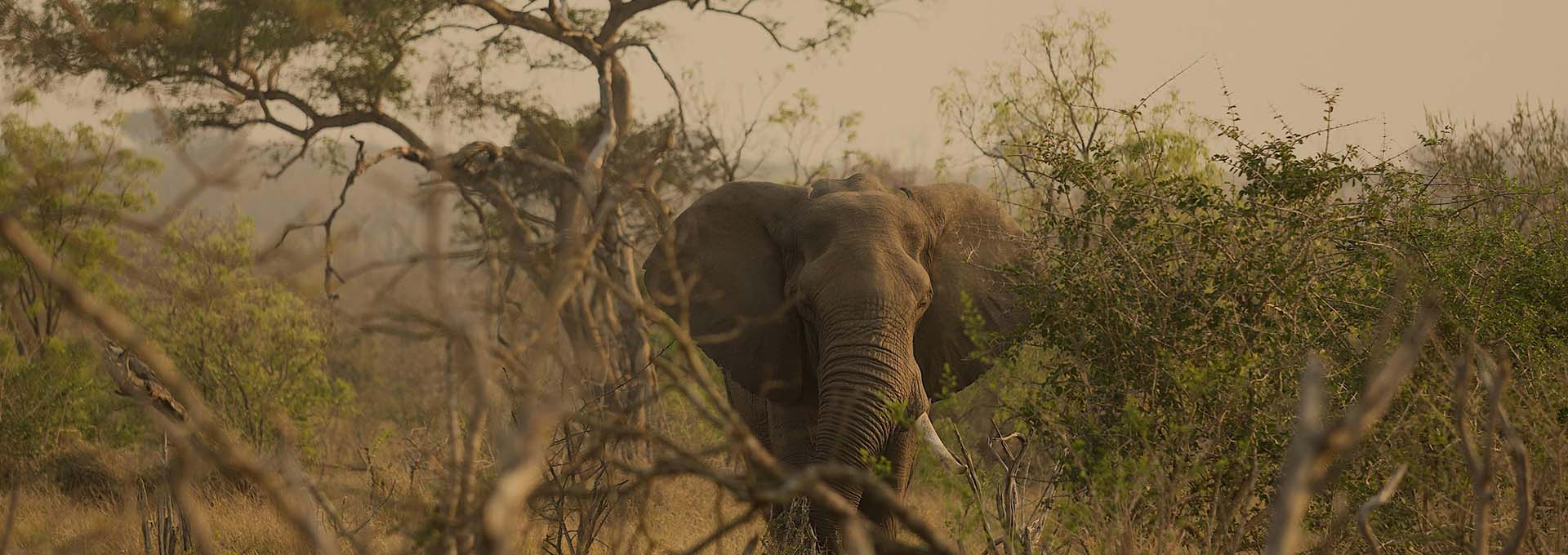
Manadas de elefantes que se cuentan por cientos, baobabs milenarios y una gran concentración de fauna en la temporada seca a orillas de un río: Tarangire es el secreto mejor guardado del circuito norte.
2,850 km²
Valle fluvial, pantanos y bosques de baobabs
Hasta 300
Elefantes en una sola manada durante la temporada seca
Baobabs milenarios
La silueta emblemática del parque
Jun – Oct pico
Concentración de fauna en temporada seca
Norte de Tanzania
Qué hace que Tarangire sea especial
Tarangire toma su nombre del río que lo atraviesa, la única fuente permanente de agua en la zona. Durante la mayor parte del año, el parque es un paisaje apacible de bosques de acacias, llanuras abiertas e imponentes baobabs. Luego, de junio a octubre, la temporada seca lo transforma: elefantes, búfalos, cebras, ñus, órices y sus depredadores convergen hacia el río desde un extenso radio de la estepa Maasai, creando concentraciones de fauna superadas únicamente por el Serengeti.
Tarangire es también el mejor parque del circuito norte para ver elefantes —manadas de hasta 300 animales recorren el valle del río— y por sus evocadores paisajes, con baobabs recortados contra la luz dorada del atardecer. Es el parque más cercano a Arusha, lo que lo convierte en la primera parada natural de cualquier itinerario por el circuito norte.
Las mayores manadas de elefantes de temporada seca del norte de Tanzania
Tierra emblemática de baobabs y fotografía en la hora dorada
Posibilidad de safaris a pie guiados en zonas designadas
Fácil combinación con Lake Manyara, Ngorongoro y el Serengeti
Tarangire de un vistazo
Fundación
1970
Superficie
2,850 km²
Ubicación
Norte de Tanzania, cerca de Lake Manyara
Ciudad más cercana
Arusha (a unas 2 horas por carretera)
Ecosistema
Valle fluvial, pantanos y bosques de acacias y baobabs
Famoso por
Manadas de elefantes, baobabs, concentración de temporada seca
Mes a mes
La mejor época para visitar Tarangire
La historia de la fauna de Tarangire la escribe el agua. Cuando las lluvias llenan la estepa, los animales se dispersan mucho más allá del parque. Cuando las llanuras se secan, regresan en masa al río, y es entonces cuando Tarangire muestra todo su esplendor.
Junio – Octubre
Temporada alta
Concentración de temporada seca
Río Tarangire y pantano de Silale
El río se convierte en la única fuente fiable de agua en kilómetros a la redonda, por lo que la fauna acude en masa al parque. Manadas de elefantes de hasta 300 ejemplares se congregan a orillas del río, junto a búfalos, cebras, ñus y sus depredadores.
Noviembre – Diciembre
Buena
Lluvias cortas
En todo el parque
La hierba fresca y las charcas llenas dispersan a las manadas y desplazan a algunos animales hacia la estepa Maasai. El parque se tiñe de verde, llegan las aves migratorias y hay pocos visitantes.
Enero – marzo
Buena
Nacimientos y dispersión
Límites de la estepa Maasai
Muchos animales se desplazan fuera del parque hacia las zonas de cría en la estepa abierta, como parte de la migración del ecosistema más amplio de Tarangire-Manyara. La fauna residente permanece a lo largo del río y los pantanos.
Abril – mayo
Tranquilidad
Lluvias largas
En todo el parque
Los meses más verdes y tranquilos. Algunas pistas se vuelven lodosas y la fauna está más dispersa, pero los lodges ofrecen sus tarifas más bajas y la luz es magnífica para la fotografía.
Vida silvestre
Qué puedes ver en Tarangire
Elefantes
La gran atracción del parque. Manadas familiares, a veces de hasta 300 miembros en la temporada seca, se cubren de polvo rojizo a lo largo del río y en el pantano de Silale.
Grandes felinos
Las manadas de leones acechan a los rebaños y en ocasiones trepan a los árboles, los leopardos cazan en los bosques ribereños y los guepardos patrullan las llanuras abiertas del sur.
Especialistas de la temporada seca
El órice de orejas con flecos, el gran kudú, el gerenuc y el oribí, especies que rara vez se observan en el resto del circuito norte, se congregan aquí durante los meses secos.
Aves
Más de 500 especies registradas, incluidos agapornis de collar amarillo, avestruces, avutardas kori, águilas volatineras, cálaos y aves migratorias paleárticas estacionales.
Dónde ir
Dónde ir en Tarangire
Valle del río Tarangire
Todo el año
La arteria vital del parque. Meandros fluviales, pozas y riberas salpicadas de baobabs albergan las mayores concentraciones de elefantes, además de leones, leopardos, jirafas y grandes manadas de búfalos.
Pantano de Silale
Junio – Octubre
Un vasto humedal estacional en el oeste. En la temporada seca atrae enormes manadas de elefantes, manadas residentes de leones y algunos de los mejores avistamientos de leopardos del parque.
Bosques de baobabs del norte
Todo el año
El paisaje clásico de Tarangire entre la puerta principal y el río: baobabs gigantes, dik-diks, oribís, una impresionante avifauna y fácil acceso para un primer safari por la tarde.
Llanuras abiertas del sur
Junio – Octubre
El rincón más remoto, donde la estepa se abre. Menos vehículos y la mejor oportunidad de observar especialistas de la temporada seca como el órice de orejas con flecos, el gran kudú y el gerenuc.
Safaris en Tarangire
Safaris que incluyen Tarangire
Todas estas son salidas privadas con un Land Cruiser 4×4, un guía-conductor de habla inglesa y todas las tasas de parque, conservación y cráter incluidas. Tarangire suele combinarse con el lago Manyara, Ngorongoro y el Serengeti.
Los precios son por persona en USD, e incluyen tasas de parques, conservación y del cráter con IVA, alojamiento en pensión completa, un 4×4 privado y traslados al aeropuerto. Consulte el guía de costes de safari en Tanzania para ver el desglose completo.
Preguntas sobre Tarangire
¿Por qué es famoso el Parque Nacional Tarangire?
Tarangire es famoso por sus gigantescas manadas de elefantes y sus ancestrales baobabs. En la temporada seca, el río Tarangire se convierte en la única fuente de agua fiable de la zona, atrayendo enormes concentraciones de elefantes y otra fauna salvaje, rivalizando con el Serengeti en cantidad de animales durante esa época del año.
¿Cuál es la mejor época para visitar Tarangire?
De junio a octubre, durante la temporada seca, es la mejor época. La fauna se congrega en grandes cantidades a lo largo del río Tarangire y alrededor del pantano de Silale, la vegetación es escasa y la observación de animales alcanza su punto álgido. La temporada verde, de noviembre a mayo, ofrece paisajes exuberantes, una magnífica observación de aves y muchos menos visitantes, aunque los animales están más dispersos.
¿Dónde se encuentra Tarangire en Tanzania?
Tarangire se encuentra en el norte de Tanzania, a unos 120 km al suroeste de Arusha, aproximadamente a dos horas en coche por carretera asfaltada. Suele ser el primer parque que se visita en un safari por el circuito norte, antes del lago Manyara, Ngorongoro y el Serengeti.
¿Qué extensión tiene el Parque Nacional Tarangire?
El parque abarca unos 2,850 km², lo que lo convierte en el sexto parque nacional más grande de Tanzania. Constituye el núcleo del ecosistema más amplio de Tarangire-Manyara, donde la fauna migra estacionalmente entre el parque y la estepa masái circundante.
¿Cuántos elefantes se pueden ver en Tarangire?
Tarangire alberga una de las mayores poblaciones de elefantes del norte de Tanzania. Durante la temporada seca, manadas familiares de hasta 300 animales se reúnen a lo largo del río, y es común encontrar múltiples manadas en un solo safari.
¿Se pueden ver los Cinco Grandes en Tarangire?
Cuatro de los Cinco Grandes se observan con regularidad: elefantes y búfalos en grandes cantidades, leones, que a veces trepan a los árboles aquí, y leopardos en los bosques ribereños y alrededor de los pantanos. Los rinocerontes no están presentes en Tarangire, por lo que los Cinco Grandes al completo suelen completarse en el cráter del Ngorongoro.
¿Cuántos días se necesitan en Tarangire?
Uno o dos días son suficientes para la mayoría de los visitantes. Un solo día completo de safari cubre el río y los principales bosques de baobabs; un segundo día le permite explorar el pantano de Silale y las llanuras del sur, más tranquilas, y puede incluir un safari a pie guiado en áreas designadas.
¿Vale la pena visitar Tarangire si voy al Serengeti?
Sí, se complementan a la perfección. Tarangire ofrece las mayores manadas de elefantes, emblemáticos paisajes de baobabs y safaris a pie, todo a solo dos horas de Arusha. La mayoría de nuestros itinerarios combinan Tarangire con el lago Manyara, Ngorongoro y el Serengeti en un viaje perfecto por el circuito norte.
Planifique su safari en Tarangire
Indíquenos sus fechas de viaje y el tamaño de su grupo. Haremos coincidir la concentración de la temporada seca con la época ideal del año, le recomendaremos lodges cerca de la entrada o dentro del parque, y conectaremos Tarangire con el lago Manyara, el cráter del Ngorongoro y el Serengeti.
4×4 privado con un conductor-guía experimentado
Tasas de parques, alojamiento y comidas incluidos
Programado en torno a la concentración de elefantes de la temporada seca
No se requiere depósito en este paso, respuesta en un plazo de 24 horas