Kilimanjaro takes you from humid rainforest at 1,800 m to arctic conditions at 5,895 m in under a week. You will feel four seasons in one day, which is why packing is less about buying everything and more about packing the right layers in the right weight.
This is the same list our guides run through at the pre-climb briefing in Moshi the evening before every departure. Anything you are missing can be rented locally, so do not panic-buy at the airport.
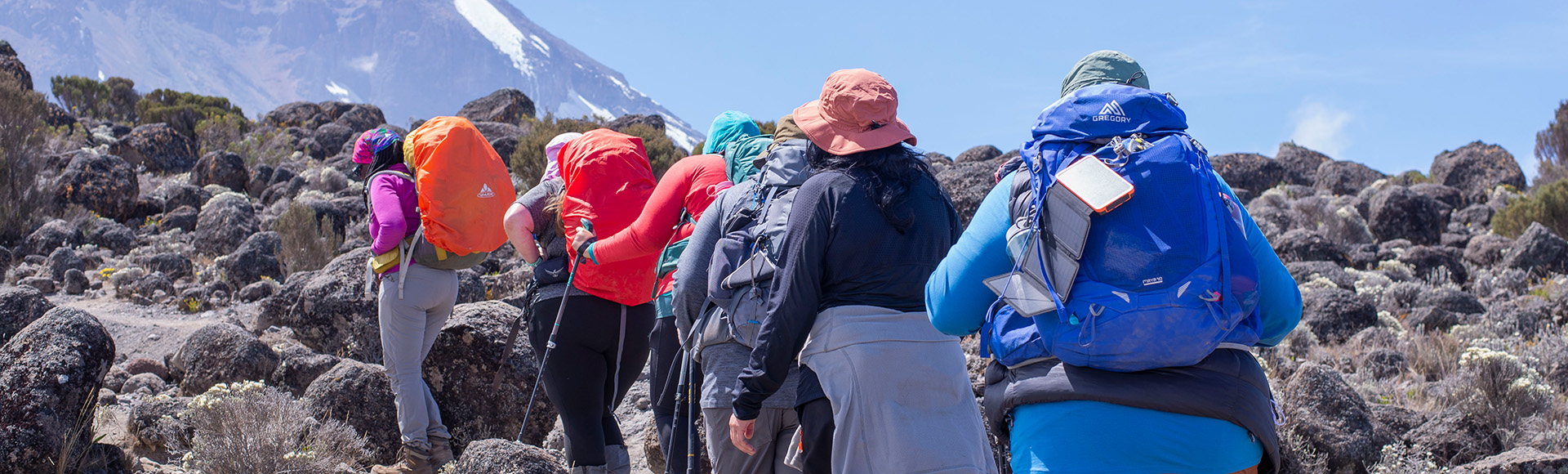
Your porter carries one duffel (maximum 15 kg, park-enforced), you carry a 30–35 L daypack with water, snacks, rain shell, warm layer, camera and documents. Anything you might need between camps must live in the daypack — porters walk ahead and you will not see the duffel until camp.
Clothing: the layering system
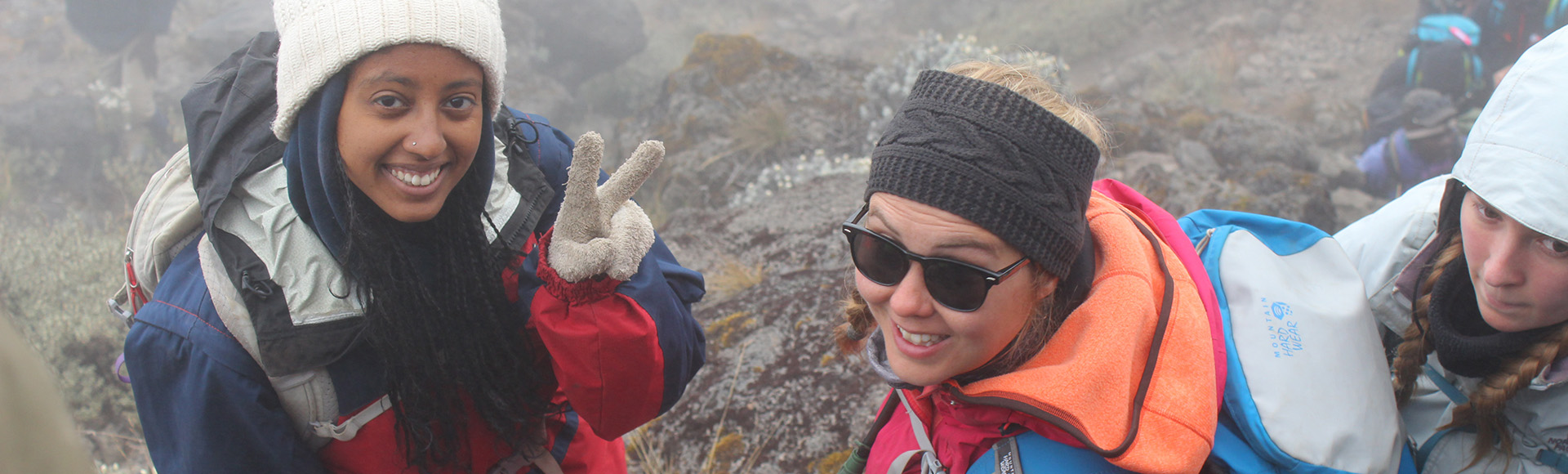
Cotton is the one true enemy on Kilimanjaro — it soaks, chills and never dries at altitude. Everything against your skin should be merino wool or synthetic. Build three layers you can add and remove within seconds while walking.
Base layers
- 3 × moisture-wicking t-shirts or short-sleeve tops
- 2 × long-sleeve thermal tops (one lightweight, one mid-weight for summit night)
- 2 × thermal bottoms / long johns
- 4–5 × underwear, 1 × sports bra per two days
- 4 × hiking socks (merino) + 1 × thick summit-night pair
Mid and outer layers
- 1 × fleece or soft-shell jacket
- 1 × insulated down jacket (rated to about −10 °C) — rentable in Moshi
- 1 × waterproof, breathable rain jacket with hood
- 1 × waterproof over-trousers (full side zips are easiest over boots)
- 2 × quick-dry hiking trousers, ideally one convertible pair
- 1 × pair of fleece-lined or insulated trekking trousers for summit night
Head, hands and feet
- Warm beanie that covers the ears
- Wide-brim sun hat or cap with neck cover
- Balaclava or buff (summit-night wind chill can hit −20 °C)
- Liner gloves + insulated waterproof outer gloves or mittens
- Broken-in waterproof hiking boots with ankle support
- Camp shoes or trainers for the evenings
- Gaiters for scree and dust on the descent
Sleeping and camp gear
- Four-season sleeping bag rated to at least −10 °C comfort (rentable)
- Sleeping bag liner for extra warmth and hygiene
- Inflatable or foam sleeping mat (we provide foam mats; bring an inflatable if you sleep cold)
- Head torch with spare batteries — essential for summit night
- Pillowcase you can stuff with clothes, or a small inflatable pillow
Essentials most people forget
- 3 L water capacity: a 2 L hydration bladder plus a 1 L wide-mouth bottle (bladders freeze on summit night — the bottle is your backup)
- Insulated bottle cover, or keep the bottle upside down so ice forms at the base
- Sunglasses with UV/glacier protection (category 3 or 4)
- SPF 50 sunscreen and SPF lip balm — UV rises roughly 10 % per 1,000 m
- Personal first-aid kit: blister plasters, ibuprofen, rehydration salts, plasters, personal medication
- Wet wipes and hand sanitiser (no showers on the mountain)
- Two 20,000 mAh power banks — cold drains batteries fast
- Trekking poles (adjustable, pair) — they save your knees on the Mweka descent
- Dry bags or bin liners to line the duffel and daypack
- Snacks you actually like: nuts, energy bars, sweets for summit night
Documents and money
- Passport valid at least six months, plus a photocopy
- Tanzania visa (e-visa or on arrival) and yellow fever certificate if arriving from an endemic country
- Travel insurance certificate covering trekking to 6,000 m and helicopter evacuation
- USD cash in small, post-2009 notes for tips and Moshi extras
Jeans, heavy cotton hoodies, a second pair of boots, drones (permits are near-impossible), bulky toiletries and anything you would be upset to lose to dust. Your hotel in Moshi stores your extra luggage free of charge while you climb.
Rent in Moshi instead of buying
If you climb once, renting is far cheaper than kitting out. Typical rental prices from our Moshi store, per climb: down jacket USD 25–40, four-season sleeping bag USD 30–45, trekking poles USD 15–20, gaiters USD 10, waterproof trousers USD 20, duffel bag USD 15. We fit everything at the briefing the day before departure.
| Item | Buy or rent | Why |
|---|---|---|
| Hiking boots | Buy | Must be broken in on your own feet — blisters end climbs |
| Down jacket | Rent | Used for two nights; expensive to buy |
| Sleeping bag | Rent | Bulky to fly with; rentals are washed after every climb |
| Base layers | Buy | Personal fit and hygiene; useful at home |
| Trekking poles | Rent | Awkward in hand luggage, cheap to hire |
Frequently Asked Questions
How heavy can my duffel bag be?
Kilimanjaro National Park limits each porter to 20 kg total, which means a maximum of 15 kg of your own gear in the duffel. We weigh bags at the gate — anything over must be redistributed or left behind.
Do I need to break in my boots?
Yes. Walk at least 50–80 km in them before you fly, including some downhill. Blisters are the single most common reason climbers struggle before altitude even becomes a factor.
Can I charge devices on the mountain?
There is no mains power above the gate. Bring a power bank with enough capacity to last the whole trek — plan for the full number of days on the mountain — and keep it inside your sleeping bag at night so the cold does not drain it.
Planning a Trip?
Our Moshi team answers every enquiry personally. No deposit required at this step, we reply within 24 hours.