Tanzania Travelers
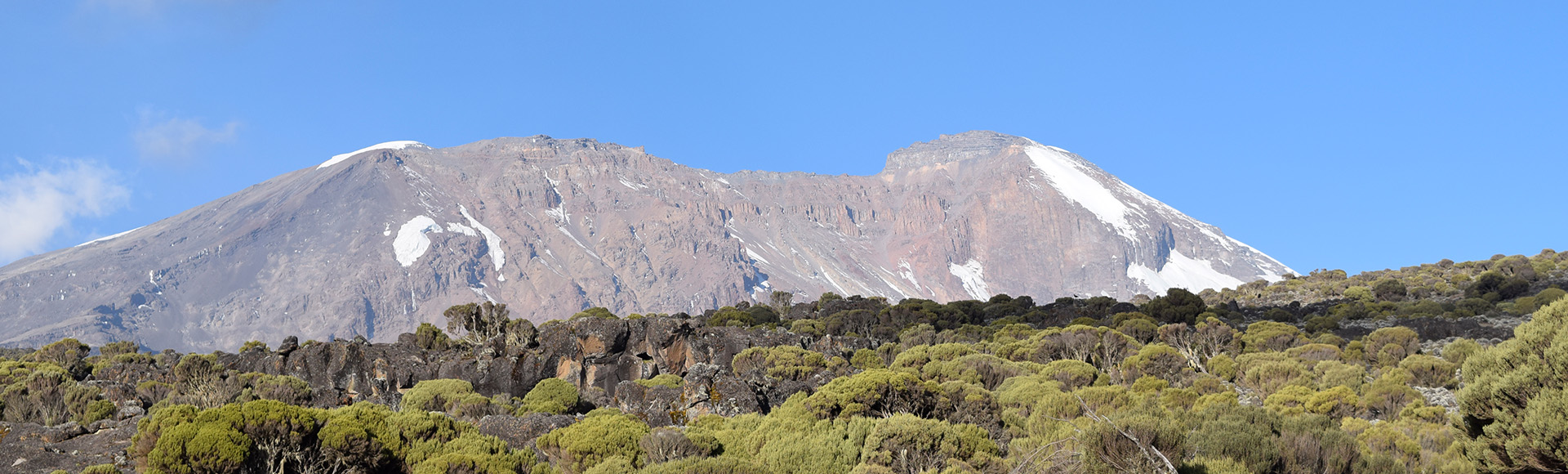
Mount Kilimanjaro at sunrise
5,895 m · The Roof of Africa

Climbing Mount Kilimanjaro The right route for you.

At 5,895 metres, Kilimanjaro is the highest mountain in Africa and the tallest free-standing mountain on Earth. Its snow-capped summit is one of the world's great trekking prizes — and it's within reach of any determined, reasonably fit adventurer.

Compare routes
97% summit success
One of the highest in Tanzania
Full acclimatisation
Climb high, sleep low
First summit 1889
Hans Meyer's historic ascent
Stratovolcano
Dormant volcanic giant
4,900 m above base
Tallest free-standing mountain
Ecological zones

Five climate zones in one climb

Cultivation and Rainforest Zone

800m - 1,800m and 1,800m – 2,800 m

Heath and Moorland Zone

2,800 – 4,000 m

Alpine Desert Zone

4,000 – 5,000 m

Arctic Summit Zone

5,000 – 5,895 m
When to climb

Best time to climb

Jan – Mar

Best

Warm, quiet, clear skies.

Jun – Oct

Best

Main dry season — most reliable.

Apr – May

Shoulder

Long rains — wet trails.

November

Shoulder

Short rains, fewer climbers.

Choose your route

Four routes to the summit.

The route shapes the climb. We'll help you choose based on your fitness, schedule and the kind of summit day you want.

The Scenic Route

Lemosho Route

The most beautiful — and most successful — way up Kilimanjaro.

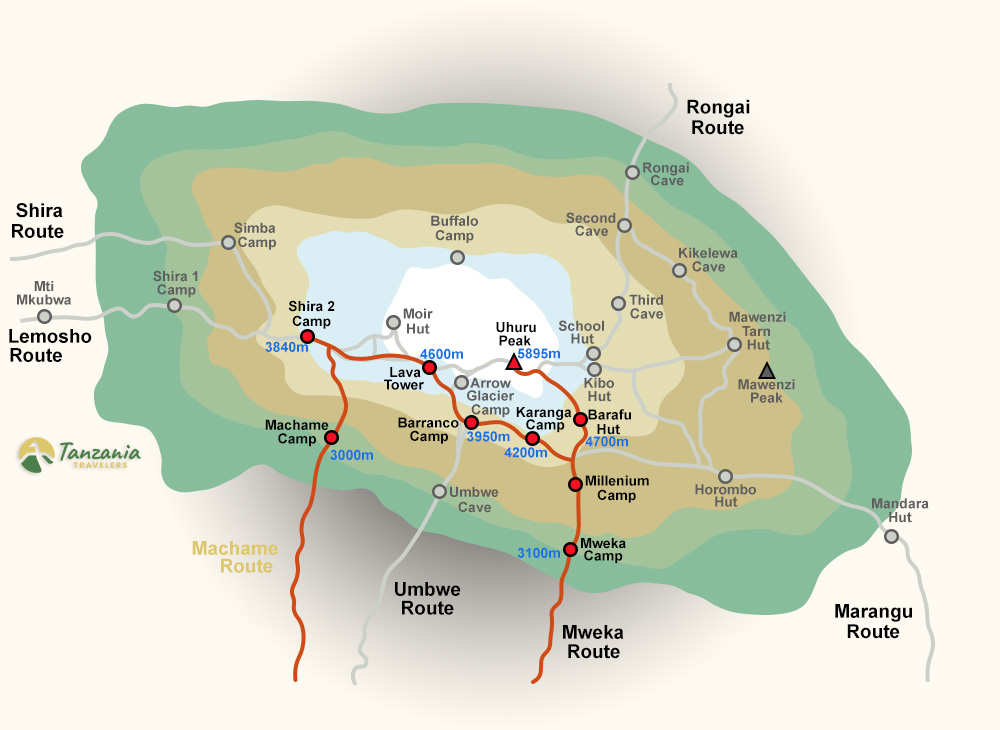
Approaches Kilimanjaro from the quiet west, crossing the Shira Plateau and joining the Southern Circuit for the summit push. Long, gradual acclimatisation and huge summit-day success rates.
Best for
First-time high-altitude climbers who want the best chance of success.
Difficulty
Moderate
Scenery
Exceptional — rainforest, plateau, alpine desert, glaciers
Crowds
Quiet on days 1–3, busier from Barranco onward
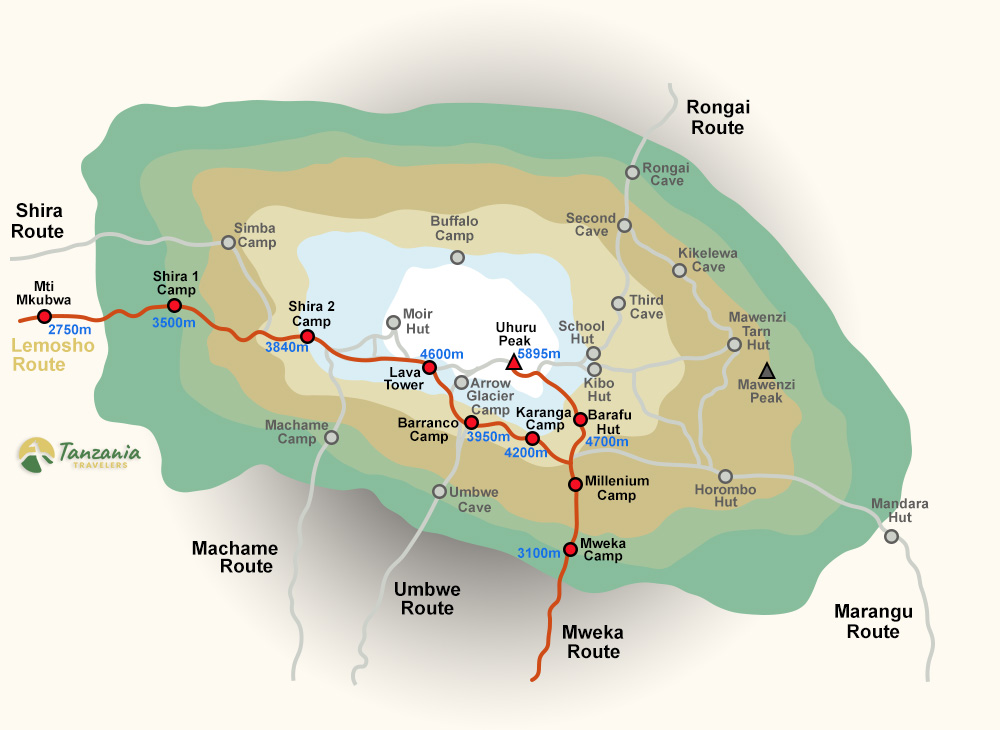
Lemosho Route trail map
Durationfrom $1,800

Lemosho Route — 8 Days

Our most successful Kilimanjaro itinerary. The extra night at Karanga Camp gives your body one more day above 4,000 m before the summit push — the single biggest factor in reaching Uhuru Peak strong. Recommended for first-time high-altitude trekkers and anyone who wants to truly enjoy the climb rather than endure it.

Quick facts
Start point
Londorossi Gate (2,250 m)
End point
Mweka Gate (1,640 m)
Distance
≈ 70 km / 42 mi round trip
Highest point
Uhuru Peak · 5,895 m
Group size
Private, 1–12 climbers
Best season
Jan–Mar, Jun–Oct
Difficulty
Moderate
Traffic
Low to moderate
Scenery
Exceptional
Accommodation
Mountain tents
Itinerary at a glance
  1. 1
    Moshi → Londorossi Gate → Mti Mkubwa

    Morning briefing and gear check in Moshi. Drive 4 hours via Boma Ng'ombe to the Londorossi Gate (2,250 m) for park registration.

    Meals: L, D· Mti Mkubwa Camp · 2,820 m
  2. 2
    Mti Mkubwa → Shira 1 Camp

    Climb out of the rainforest into the heather and moorland zone. 5–6 hours.

    Meals: B, L, D· Shira 1 Camp · 3,505 m
  3. 3
    Shira 1 → Shira 2 Camp

    An easier acclimatisation day traversing the Shira Plateau with Kibo's glaciers ahead and Mt. Meru behind. 4–5 hours.

    Meals: B, L, D· Shira 2 Camp · 3,810 m
  4. 4
    Shira 2 → Lava Tower → Barranco Camp

    Ascend the Southern Circuit to Lava Tower (4,630 m) for lunch — the classic 'climb high, sleep low' day. 6–7 hours.

    Meals: B, L, D· Barranco Camp · 3,960 m
  5. 5
    Barranco → Karanga Camp

    A short but spectacular day. 4–5 hours.

    Meals: B, L, D· Karanga Camp · 3,995 m
  6. 6
    Karanga → Barafu Camp

    The acclimatisation day that makes this itinerary special. 3–4 hours.

    Meals: B, L, D· Barafu Camp · 4,673 m
  7. 7
    Summit Day · Barafu → Uhuru Peak → Mweka Camp

    Wake at 23:30 for tea and biscuits. 12–14 hours.

    Meals: B, L, D· Mweka Camp · 3,068 m
  8. 8
    Mweka Camp → Mweka Gate → Moshi

    A final 3-hour descent through the rainforest to Mweka Gate.

    Meals: B, L
Pricing comparison

Price per person in USD, by group size and trek length.

Group size8 Days7 Days
1 person$2,600$2,500
2 people$2,280$2,200
3 people$2,220$2,095
4 people$2,190$2,050
5 people$2,150$2,000
6 people$2,100$1,940
7 people$2,050$1,900
8 people$1,975$1,865
9 people$1,920$1,800
10 people$1,800$1,770
The Coca-Cola Route

Marangu Route

The only route with permanent mountain huts — no tents required.

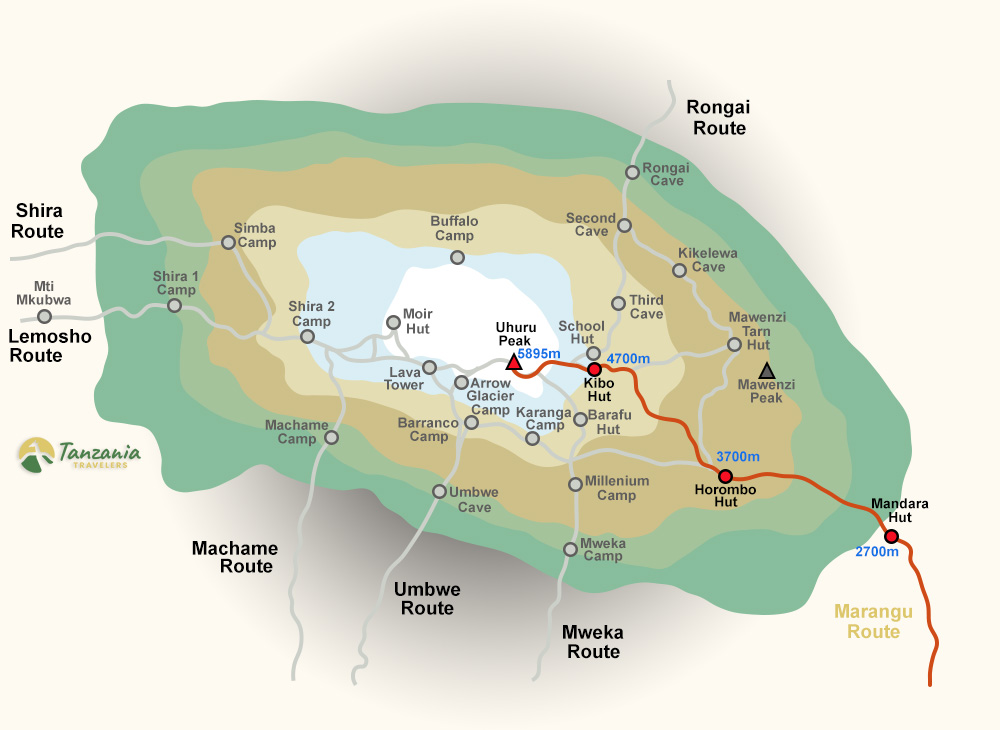
The oldest and most established route. Ascends and descends on the same trail from the south-east. Sleeping is in shared dormitory-style huts with bunks and mattresses.

Best for
Climbers who prefer huts to tents, or want the shortest possible itinerary.
Difficulty
Moderate
Scenery
Good — rainforest, moorland, the stark Saddle
Crowds
Busy — the most-trafficked route
Marangu Route trail map
Durationfrom $1,670

Marangu Route — 6 Days

Add one more night at Horombo Hut (3,720 m) with an acclimatisation walk to Zebra Rocks (4,000 m), and your chance of reaching Uhuru Peak on Marangu jumps significantly. Same comfortable huts, same route — one extra day for your body to adapt.

Quick facts
Start point
Marangu Gate (1,860 m)
End point
Marangu Gate (same route)
Distance
≈ 72 km round trip
Highest point
Uhuru Peak · 5,895 m
Best season
Jan–Mar, Jun–Oct
Difficulty
Moderate
Traffic
Low to moderate
Scenery
Exceptional
Accommodation
Mountain huts (no tents)
Itinerary at a glance
  1. 1
    Moshi → Marangu Gate → Mandara Hut

    Morning briefing and gear check in Moshi, then a 1-hour drive to Marangu Gate (1,860 m) for park registration.

    Meals: L, D· Mandara Hut · 2,700 m
  2. 2
    Mandara → Horombo Hut

    The forest ends abruptly within an hour and gives way to open heath and moorland studded with giant lobelias and senecios.

    Meals: B, L, D· Horombo Hut · 3,720 m
  3. 3
    Acclimatisation day at Horombo · Zebra Rocks

    The day that makes this itinerary work. 3 hours (acclimatisation).

    Meals: B, L, D· Horombo Hut · 3,720 m
  4. 4
    Horombo → Kibo Hut

    Past the Last Water Point at 4,130 m — from here everything is carried — and out onto 'The Saddle', a stark, wind-scoured alpine desert between Mawenzi and Kibo. 6–7 hours.

    Meals: B, L, D· Kibo Hut · 4,700 m
  5. 5
    Summit Day · Kibo → Uhuru Peak → Horombo Hut

    Wake at 23:00 for tea and biscuits and set off by headtorch at midnight. 12–14 hours.

    Meals: B, L, D· Horombo Hut · 3,720 m
  6. 6
    Horombo → Marangu Gate → Moshi

    A long but easy descent retracing the moorland and rainforest path, with a rest stop at Mandara Hut. 5–6 hours.

    Meals: B, L
Pricing comparison

Price per person in USD, by group size and trek length.

Group size6 Days5 Days
1 person$2,250$2,100
2 people$2,100$1,850
3 people$1,900$1,830
4 people$1,870$1,800
5 people$1,810$1,780
6 people$1,800$1,760
7 people$1,760$1,740
8 people$1,710$1,690
9 people$1,670$1,600
10 people$1,690$1,580
The Whiskey Route

Machame Route

Steeper, wilder, more dramatic — Kilimanjaro's climber's route.

Approaches from the south and crosses to the west before curving back for a southern summit push. Steeper daily gain than Marangu, but excellent scenery and a great built-in acclimatisation profile.

Best for
Fit trekkers with prior multi-day hiking experience.
Difficulty
Challenging
Scenery
Superb — five climate zones, the iconic Barranco Wall
Crowds
Popular — the busiest camping route
Machame Route trail map
Durationfrom $1,750

Machame Route — 7 Days

The 7-day variant of the popular Machame route adds a rest night at Karanga Camp between Barranco and Barafu. That extra day at altitude is the single biggest boost to summit success on any Kilimanjaro route.

Quick facts
Start point
Machame Gate (1,640 m)
End point
Mweka Gate (1,640 m)
Distance
≈ 62 km round trip
Highest point
Uhuru Peak · 5,895 m
Group size
Private, 1–12 climbers
Best season
Jan–Mar, Jun–Oct
Difficulty
Moderate
Traffic
Low to moderate
Scenery
Exceptional
Accommodation
Mountain tents
Itinerary at a glance
  1. 1
    Moshi → Machame Gate → Machame Camp

    Morning briefing and full gear check at your hotel in Moshi. 5–6 hours.

    Meals: L, D· Machame Camp · 3,010 m
  2. 2
    Machame Camp → Shira Camp

    The forest thins within an hour and the trail steepens onto a rocky ridge of the Shira Plateau.

    Meals: B, L, D· Shira Camp · 3,845 m
  3. 3
    Shira → Lava Tower → Barranco Camp

    The classic 'climb high, sleep low' day and the most important for acclimatisation. 6–7 hours.

    Meals: B, L, D· Barranco Camp · 3,960 m
  4. 4
    Barranco → Karanga Camp

    A short, spectacular day. 4–5 hours.

    Meals: B, L, D· Karanga Camp · 3,995 m
  5. 5
    Karanga → Barafu Camp

    A steady climb up the rocky ridge across barren alpine desert to Barafu — Swahili for 'ice' — the summit base camp perched on an exposed shoulder at 4,673 m. 4–5 hours.

    Meals: B, L, D· Barafu Camp · 4,673 m
  6. 6
    Summit Day · Barafu → Uhuru Peak → Mweka Camp

    Wake at 23:30 for tea and biscuits and set off by headtorch at midnight, climbing switchbacks of frozen scree at a deliberate pole-pole pace. 12–14 hours.

    Meals: B, L, D· Mweka Camp · 3,068 m
  7. 7
    Mweka Camp → Mweka Gate → Moshi

    A final descent on soft forest trail — muddy after rain, so gaiters are handy — through the rainforest to Mweka Gate. 3–4 hours.

    Meals: B, L
Pricing comparison

Price per person in USD, by group size and trek length.

Group size7 Days6 Days
1 person$2,400$2,300
2 people$2,200$1,880
3 people$2,080$1,840
4 people$2,040$1,820
5 people$1,900$1,800
6 people$1,870$1,780
7 people$1,820$1,750
8 people$1,800$1,700
9 people$1,770$1,680
10 people$1,750$1,650
The Northern Route

Rongai Route

The quiet northern approach — drier, wilder, less trafficked.

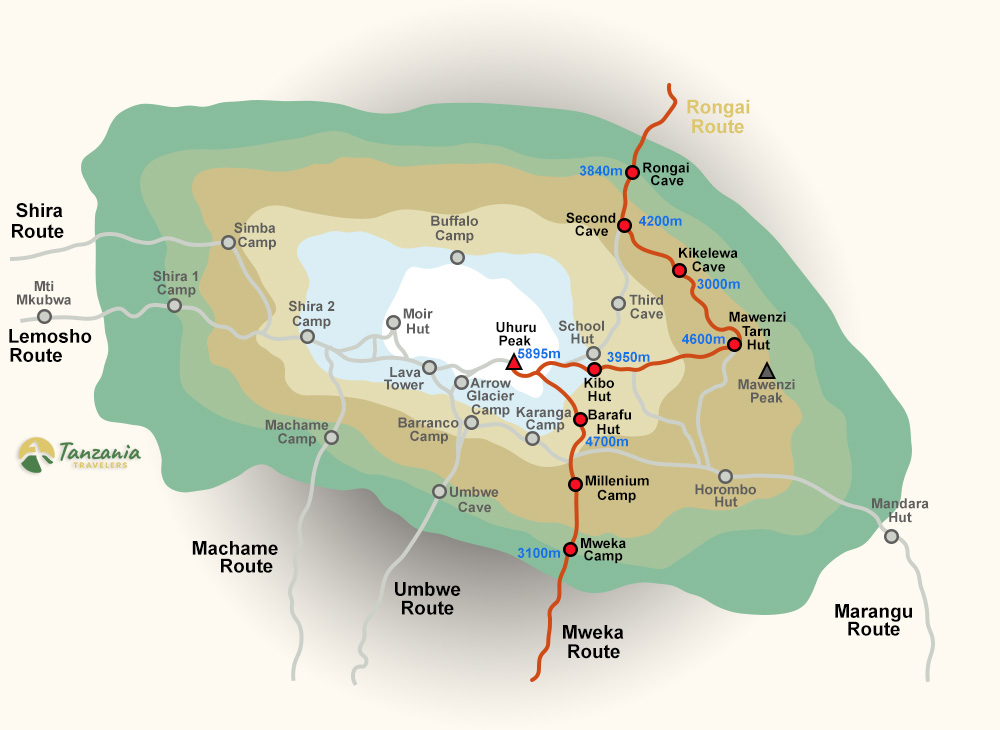
The only route that approaches Kilimanjaro from the north, near the Kenyan border. Drier weather, fewer climbers, and better chances of wildlife sightings in the lower forest zones.

Best for
Climbers who value solitude and want a drier alternative in shoulder seasons.
Difficulty
Moderate
Scenery
Remote — northern wilderness, Mawenzi views, alpine desert
Crowds
Very quiet — the least-trafficked main route
Rongai Route trail map
Durationfrom $1,750

Rongai Route — 7 Days

Adding a full rest and acclimatisation day at Mawenzi Tarn (4,330 m) makes a huge difference to summit success on Rongai. You still enjoy the quiet northern approach and drier weather, but with your body properly primed for the 5,895 m summit push.

Quick facts
Start point
Nalemoru Gate (2,020 m)
End point
Mweka Gate (1,640 m)
Distance
≈ 73 km point-to-point
Highest point
Uhuru Peak · 5,895 m
Group size
Private, 1–12 climbers
Best season
Jun–Oct (drier northern side)
Difficulty
Moderate
Traffic
Low to moderate
Scenery
Exceptional
Accommodation
Mountain tents
Itinerary at a glance
  1. 1
    Moshi → Nalemoru Gate → Simba Camp

    Morning briefing and gear check in Moshi, then a 3–4 hour drive around the mountain to Nalemoru Gate (2,020 m) near the Kenyan border for park registration.

    Meals: L, D· Simba Camp · 2,625 m
  2. 2
    Simba → Second Cave

    A relaxed moorland climb on a good path as the vegetation thins to heather and everlasting flowers. 3–4 hours.

    Meals: B, L, D· Second Cave · 3,450 m
  3. 3
    Second Cave → Kikelewa Camp

    Leave the main northern trail and traverse east across trackless open moorland beneath the north face of Kibo — a wild, rarely walked section with almost no other climbers. 6–7 hours.

    Meals: B, L, D· Kikelewa Camp · 3,679 m
  4. 4
    Kikelewa → Mawenzi Tarn

    Short but steep, climbing grassy slopes into the alpine zone as the ground turns rocky and bare. 3–4 hours.

    Meals: B, L, D· Mawenzi Tarn · 4,330 m
  5. 5
    Acclimatisation day at Mawenzi Tarn

    The day that transforms Rongai's summit odds. 3–4 hours (acclimatisation).

    Meals: B, L, D· Mawenzi Tarn · 4,330 m
  6. 6
    Summit Day · Mawenzi Tarn → Kibo → Uhuru Peak → Horombo

    Morning trek across 'The Saddle', a stark alpine desert between Mawenzi and Kibo, to summit base camp at Kibo Hut (4,700 m). 15–17 hours.

    Meals: B, L, D· Horombo Hut · 3,720 m
  7. 7
    Horombo → Marangu Gate → Moshi

    A final descent through moorland and rainforest, with a rest stop at Mandara Hut, down to Marangu Gate. 5–6 hours.

    Meals: B, L
Pricing comparison

Price per person in USD, by group size and trek length.

Group size7 Days6 Days
1 person$2,500$2,400
2 people$2,200$1,890
3 people$2,150$1,850
4 people$2,100$1,825
5 people$1,980$1,800
6 people$1,900$1,800
7 people$1,840$1,800
8 people$1,800$1,750
9 people$1,770$1,730
10 people$1,750$1,725
Every Kilimanjaro climb

What's included & route FAQs

These apply to every route above — Lemosho, Machame, Marangu and Rongai. Everything covered on the ground, what's not, and the questions climbers ask most.

What's included

  • All transportation in destination location
  • Hotel accommodations, before and after the trek
  • All government taxes and park entrance fees
  • All meals while on the mountain
  • Tented accommodation on Mount Kilimanjaro
  • Emergency oxygen cylinders and oximeters
  • Complete expedition medical kits
  • Comfortable sleeping mats
  • All group camping equipment
  • Dedicated support crew
  • Experienced professional mountain guides
  • Salaries for the trekking crew
  • Medical evacuations with AMREF Flying Doctors
  • Purified water while on the mountain
  • Portable tented private flush toilet
  • Huts accommodation on Mount Kilimanjaro

The Trip Cost Excludes

  • Personal gear rentals
  • Tanzania visa fee
  • Tipping to the trekking crew
  • Travel insurance
  • Any private expenses
Do I need previous climbing experience?+

No technical climbing is required on any of the standard routes. Good general fitness and prior multi-day hiking experience are strongly recommended — you'll be trekking 5–7 hours per day for a week at high altitude.

How cold does it get on the summit?+

Summit night temperatures typically range from −7 °C to −20 °C with wind chill. Daytime at lower camps is much milder (10–20 °C). We provide a detailed packing list and can rent quality cold-weather gear locally.

What is the summit success rate?+

Our overall summit success across all routes is 96 %. On the 8-day Lemosho itinerary it climbs to 99 %. Success comes down to route length (more acclimatisation days = more oxygen in your blood at 5,895 m) and guide quality.

Is travel insurance required?+

Yes — mandatory. Your policy must cover trekking to 6,000 m and helicopter evacuation. We recommend World Nomads or Global Rescue.

How much should I tip the crew?+

The KPAP guideline is about USD 20–25 per climber per day, pooled and split among guides, cook and porters. We hand out a detailed tipping breakdown at the pre-climb briefing.

How long are the treks?+

Our Kilimanjaro treks run from five to eight days, and we recommend a minimum of six for proper acclimatisation. Total trekking distance is roughly 53–73 km depending on the route. Adding extra days significantly improves your chances of reaching Uhuru Peak — which is why we usually extend Marangu from five days to six.

How many hours will I trek each day?+

Expect 4–7 hours of hiking on a typical day. Summit day is the longest at 10–15 hours including the ascent and initial descent, and some descent days can run 8–10 hours. Actual times depend on your pace, the weather and the route.

Can children climb Kilimanjaro?+

Yes. Kilimanjaro National Park sets a minimum age of 10 years for children trekking to Uhuru Peak.

What kind of food will I eat?+

Our mountain chefs prepare three hot, nutritious meals a day plus trail snacks and afternoon tea, served in the dining tent. Vegetarian, vegan, gluten-free, halal, diabetic-friendly and other special diets are catered for with advance notice — ask us for a sample menu.

Are there charging points on the mountain?+

There are no charging stations on Kilimanjaro. Bring power banks and spare batteries; our vehicles have charging ports for transfer days.

What travel documents do I need?+

A passport valid for at least six months beyond your travel dates, with a valid entry or re-entry visa for Tanzania.

Not sure which route to pick?

Send us your dates and fitness level — a real guide (not a chatbot) will reply within 24 hours with a personal recommendation.