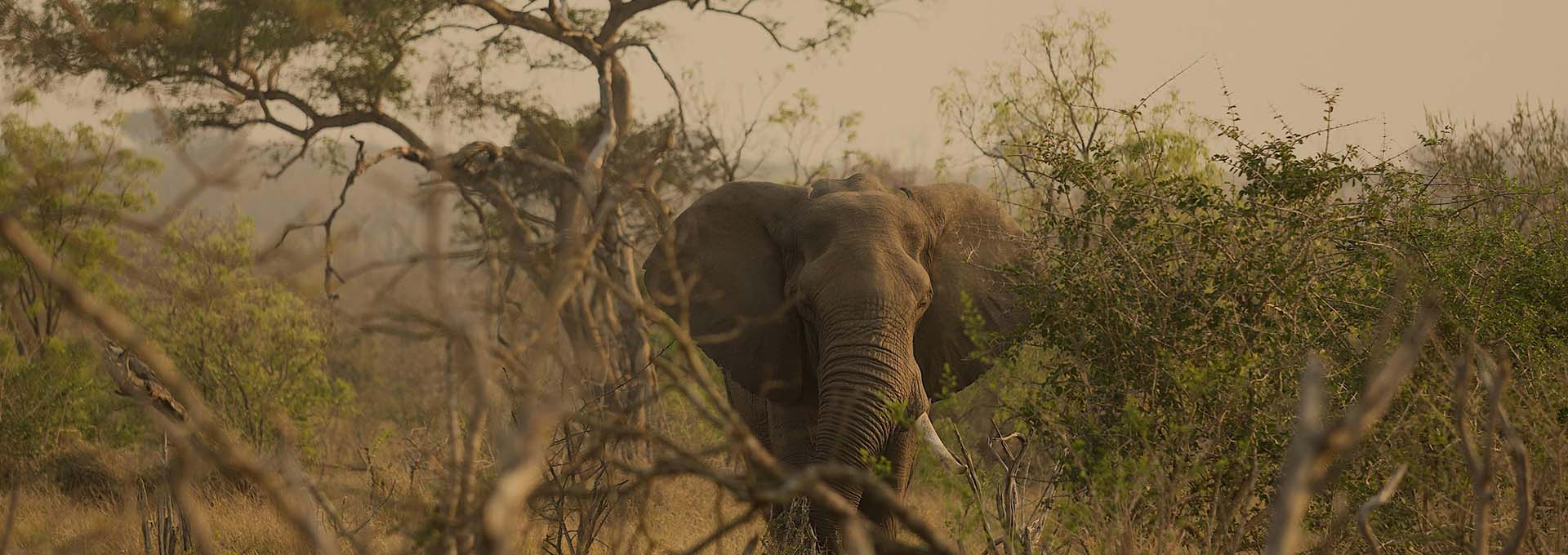
Des troupeaux d'éléphants par centaines, des baobabs séculaires et un rassemblement d'animaux sauvages le long d'une rivière en saison sèche : Tarangire est le secret le mieux gardé du circuit nord.
2,850 km²
Vallée fluviale, marais et forêts de baobabs
Jusqu'à 300
Éléphants au sein d'un seul troupeau en saison sèche
Baobabs séculaires
La silhouette emblématique du parc
Pic de juin – oct.
Rassemblement de la faune en saison sèche
Nord de la Tanzanie
Ce qui rend Tarangire unique
Tarangire tire son nom de la rivière qui le traverse, la seule source d'eau permanente de la région. Presque toute l'année, le parc offre un paysage paisible de forêts d'acacias, de plaines ouvertes et de baobabs majestueux. Puis, de juin à octobre, la saison sèche le métamorphose : éléphants, buffles, zèbres, gnous, oryx et leurs prédateurs convergent vers la rivière depuis les vastes étendues de la steppe Maasai, créant des concentrations d'animaux sauvages qui n'ont d'égales que celles du Serengeti.
Tarangire est également le meilleur parc du circuit nord pour observer les éléphants — des troupeaux comptant jusqu'à 300 individus sillonnent la vallée fluviale — et pour ses panoramas envoûtants, avec la silhouette des baobabs se découpant dans la lumière dorée du soir. C'est le parc le plus proche d'Arusha, ce qui en fait la première étape idéale de tout itinéraire sur le circuit nord.
Les plus grands troupeaux d'éléphants en saison sèche du nord de la Tanzanie
Paysage emblématique de baobabs et photographie à l'heure dorée
Safaris à pied guidés possibles dans les zones autorisées
Se combine facilement avec le lac Manyara, Ngorongoro et le Serengeti
Tarangire en un coup d'œil
Création
1970
Superficie
2,850 km²
Emplacement
Nord de la Tanzanie, près du lac Manyara
Ville la plus proche
Arusha (environ 2 heures de route)
Écosystème
Vallée fluviale, marais, forêts d'acacias et de baobabs
Célèbre pour
Troupeaux d'éléphants, baobabs, rassemblement en saison sèche
Mois par mois
La meilleure période pour visiter Tarangire
L'histoire de la faune de Tarangire s'écrit au fil de l'eau. Lorsque les pluies abreuvent la steppe, les animaux se dispersent bien au-delà du parc. Quand les plaines s'assèchent, ils affluent de nouveau vers la rivière, et c'est à ce moment-là que Tarangire révèle toute sa splendeur spectaculaire.
Juin – Octobre
Haute saison
Rassemblement de la saison sèche
Rivière Tarangire et marais de Silale
La rivière devenant le seul point d'eau fiable à des kilomètres à la ronde, la faune afflue dans le parc. Des troupeaux comptant jusqu'à 300 éléphants se rassemblent sur les berges, rejoints par des buffles, des zèbres, des gnous et leurs prédateurs.
Novembre – Décembre
Bon
Petite saison des pluies
Dans tout le parc
L'herbe fraîche et les points d'eau remplis dispersent les troupeaux et incitent certains animaux à rejoindre la steppe Maasai. Le parc verdit, les oiseaux migrateurs arrivent et les visiteurs se font rares.
Janvier – mars
Bon
Mises bas et dispersion
Lisière de la steppe Maasai
De nombreux animaux quittent le parc pour rejoindre les zones de mise bas dans la steppe ouverte, participant ainsi à la grande migration de l'écosystème Tarangire-Manyara. La faune sédentaire demeure quant à elle le long de la rivière et des marais.
Avril – mai
Calme
Grande saison des pluies
Dans tout le parc
Les mois les plus verdoyants et les plus calmes. Certaines pistes deviennent boueuses et la faune est plus dispersée, mais les lodges appliquent leurs tarifs les plus bas et la lumière est idéale pour la photographie.
Faune sauvage
Ce que vous pouvez voir à Tarangire
Éléphants
L'attraction emblématique du parc. Des hardes familiales, comptant parfois jusqu'à 300 individus en saison sèche, se couvrent de poussière rouge le long de la rivière et dans le marais de Silale.
Grands félins
Des troupes de lions suivent les troupeaux et grimpent parfois aux arbres, les léopards chassent dans la forêt riveraine et les guépards arpentent les plaines ouvertes du sud.
Spécialistes de la saison sèche
Oryx à oreilles frangées, grands koudous, gérénuks et ourébis, des espèces rarement observées sur le reste du circuit nord, s'y rassemblent durant les mois secs.
Oiseaux
Plus de 500 espèces répertoriées, dont l'inséparable masqué, l'autruche, l'outarde kori, le bateleur des savanes, les calaos et des migrateurs paléarctiques saisonniers.
Où aller
Où aller à Tarangire
Vallée de la rivière Tarangire
Toute l'année
Le poumon vital du parc. Les méandres du fleuve, les points d'eau et les berges parsemées de baobabs abritent les plus grandes concentrations d'éléphants, ainsi que des lions, des léopards, des girafes et d'immenses troupeaux de buffles.
Marais de Silale
Juin – Octobre
Une vaste zone humide saisonnière à l'ouest. Durant la saison sèche, elle attire de gigantesques troupeaux d'éléphants, des troupes de lions résidentes et offre certaines des plus belles observations de léopards du parc.
Forêts de baobabs du nord
Toute l'année
Le décor classique de Tarangire entre la porte principale et la rivière : baobabs géants, dik-diks, ourébis, avifaune impressionnante et accès facile pour un premier safari l'après-midi.
Plaines ouvertes du sud
Juin – Octobre
La région la plus isolée, où la steppe s'étend à perte de vue. Moins de véhicules et les meilleures opportunités d'observer les spécialistes de la saison sèche, tels que l'oryx à oreilles frangées, le grand koudou et le gérénuk.
Safaris à Tarangire
Safaris incluant Tarangire
Toutes ces formules sont des départs privés en 4×4 Land Cruiser, avec un chauffeur-guide anglophone et l'ensemble des frais de parc, de conservation et de cratère inclus. Tarangire est généralement combiné avec Lake Manyara, Ngorongoro et le Serengeti.
Les prix s'entendent par personne en USD et comprennent les frais de parc, de conservation et de cratère avec TVA, l'hébergement en pension complète, un 4×4 privatif et les transferts aéroport. Consultez le Guide des coûts de safari en Tanzanie pour le détail complet.
Questions sur Tarangire
Pourquoi le parc national de Tarangire est-il réputé ?
Tarangire est réputé pour ses hardes géantes d'éléphants et ses baobabs millénaires. Pendant la saison sèche, la rivière Tarangire devient la seule source d'eau permanente de la région, attirant d'immenses concentrations d'éléphants et d'autres animaux, rivalisant alors avec le Serengeti par le nombre spectaculaire d'animaux présents.
Quelle est la meilleure période pour visiter Tarangire ?
De juin à octobre, pendant la saison sèche, est la période idéale. La faune se concentre en grand nombre le long de la rivière Tarangire et autour du marais de Silale, la végétation est clairsemée et l'observation des animaux est à son comble. La saison verte, de novembre à mai, offre des paysages luxuriants, une ornithologie exceptionnelle et bien moins de visiteurs, bien que la faune soit plus dispersée.
Où se trouve Tarangire en Tanzanie ?
Tarangire se situe dans le nord de la Tanzanie, à environ 120 km au sud-ouest d'Arusha, soit environ deux heures de route goudronnée. C'est généralement le premier parc visité lors d'un safari sur le circuit nord, avant Lake Manyara, Ngorongoro et le Serengeti.
Quelle est la superficie du parc national de Tarangire ?
Le parc s'étend sur environ 2,850 km², ce qui en fait le sixième plus grand parc national de Tanzanie. Il constitue le cœur d'un écosystème Tarangire-Manyara bien plus étendu, où la faune migre au rythme des saisons entre le parc et la steppe masaï environnante.
Combien d'éléphants peut-on observer à Tarangire ?
Tarangire abrite l'une des populations d'éléphants les plus denses du nord de la Tanzanie. Pendant la saison sèche, des groupes familiaux comptant jusqu'à 300 individus se retrouvent le long de la rivière, et il est très fréquent d'en croiser plusieurs hardes au cours d'un même safari.
Peut-on voir les Big Five à Tarangire ?
Quatre des Big Five y sont régulièrement observés : les éléphants et les buffles en grand nombre, les lions, qui grimpent parfois aux arbres ici, et les léopards dans la forêt riveraine ainsi qu'aux abords des marais. Le rhinocéros n'est pas présent à Tarangire ; le grand chelem des Big Five se complète donc habituellement dans le cratère du Ngorongoro.
Combien de jours faut-il prévoir à Tarangire ?
Un à deux jours suffisent pour la plupart des visiteurs. Une seule journée complète de safari permet de découvrir la rivière et les principales forêts de baobabs ; une deuxième journée vous permet d'explorer les marais de Silale et les plaines plus paisibles du sud, avec la possibilité d'inclure un safari à pied guidé dans les zones autorisées.
Le Tarangire vaut-il le détour si je vais au Serengeti ?
Oui, ils se complètent parfaitement. Tarangire abrite les plus grands troupeaux d'éléphants, des paysages emblématiques de baobabs et propose des safaris à pied, le tout à deux heures d'Arusha. La plupart de nos itinéraires combinent Tarangire avec le lac Manyara, Ngorongoro et le Serengeti pour un voyage harmonieux et fluide à travers le circuit nord.
Planifiez votre safari à Tarangire
Indiquez-nous vos dates de voyage et la taille de votre groupe. Nous ferons coïncider votre séjour avec le grand rassemblement de la saison sèche, vous recommanderons des lodges près des portes ou au cœur du parc, et combinerons Tarangire avec le lac Manyara, le cratère du Ngorongoro et le Serengeti.
4×4 privé avec chauffeur-guide expérimenté
Frais de parc, hébergement et repas inclus
Programmé autour du rassemblement des éléphants de la saison sèche
Aucun acompte requis à cette étape, réponse sous 24 heures