Lemosho Route — 7 Days
Overview
Considered the most beautiful and successful route up Kilimanjaro, the 7-day Lemosho approach gives your body the time it needs to acclimatise, meaning you reach Uhuru Peak strong, lucid and able to actually enjoy the view from the roof of Africa.
Quick facts
- Start point
- Londorossi Gate (2,250 m)
- End point
- Mweka Gate (1,640 m)
- Distance
- ≈ 70 km / 42 mi round trip
- Highest point
- Uhuru Peak · 5,895 m
- Group size
- Private, 1–12 climbers
- Best season
- Jan–Mar, Jun–Oct
- Difficulty
- Moderate
- Traffic
- Low to moderate
- Scenery
- Exceptional
- Accommodation
- Mountain tents
Day-by-day itinerary
- ArrArrival Day
Arrival Day
When you arrive at Kilimanjaro International Airport (JRO), a representative from Tanzania Travelers will meet you and transfer you to a hotel in Moshi town. The hotel has everything you need for a comfortable stay: nice rooms, hot water, friendly staff, a pool and Wi-Fi. You’ll spend your first night there. If you arrive at Jomo Kenyatta International Airport (JKIA) in Nairobi, Kenya instead, we’ll pick you up and bring you to Moshi by Shuttle Bus. In the evening, there will be a meeting with the guides to help you get ready for the climb the next day.
Note: Hotel check-in starts at 2:00 PM.
Meals: Breakfast, DinnerShose Farmhouse or Brubru Lodge - 1Day 1
Moshi → Londorossi Gate → Mti Mkubwa
Today's StatusHiking Time: 3–4 hoursTotal Distance: 6 kmStarting Altitude: 2,250 m (7,382 ft)Final Altitude: 2,820 m (9,252 ft)Elevation Change: +570 mHabitat: Montane rainforestMorning briefing and gear check in Moshi, then a 4-hour drive via Boma Ng'ombe around to the remote western side of the mountain and the Londorossi Gate (2,250 m) for park registration. Picnic lunch, then a gentle afternoon trek through dense montane rainforest, watch for black-and-white colobus monkeys in the canopy, to the quiet Mti Mkubwa (Big Tree) Camp.
Meals: Lunch, DinnerMti Mkubwa Camp · 2,820 m - 2Day 2
Mti Mkubwa → Shira 1 Camp
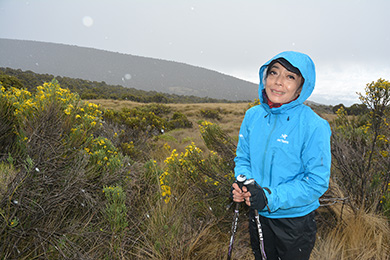
Today's StatusHiking Time: 5–6 hoursTotal Distance: 8 kmStarting Altitude: 2,820 m (9,252 ft)Final Altitude: 3,505 m (11,500 ft)Elevation Change: +685 mHabitat: Heather & moorlandClimb steeply out of the rainforest into the heather and moorland zone, following a ridge with increasingly wide views. The gradient eases as you crest onto the western rim of the Shira Plateau, an ancient collapsed caldera, and walk in across open ground with Kibo's glaciers directly ahead. Twice-daily pulse and oxygen checks begin at camp.
Meals: Breakfast, Lunch, DinnerShira 1 Camp · 3,505 m - 3Day 3
Shira 1 → Shira 2 Camp
Today's StatusHiking Time: 4–5 hoursTotal Distance: 11 kmStarting Altitude: 3,505 m (11,500 ft)Final Altitude: 3,810 m (12,500 ft)Elevation Change: +305 mHabitat: Shira Plateau moorlandA deliberately easy acclimatisation day traversing the wide, high plateau with Kibo ahead and Mt. Meru floating above the clouds behind. Optional afternoon walk toward the Shira Cathedral rock formation for 'climb high, sleep low' benefit before returning to camp for tea and popcorn.
Meals: Breakfast, Lunch, DinnerShira 2 Camp · 3,810 m - 4Day 4
Shira 2 → Lava Tower → Barranco Camp
Today's StatusHiking Time: 6–7 hoursTotal Distance: 10 kmStarting Altitude: 3,810 m (12,500 ft)Final Altitude: 3,960 m (12,995 ft)Elevation Change: +820 m / −670 m (via Lava Tower)Habitat: Alpine desertThe key acclimatisation day. Trek east across alpine desert to the volcanic plug of Lava Tower (4,630 m) for lunch, mild headaches here are normal and ease on the descent. Drop 670 m into the lush Barranco Valley past forests of giant groundsel, camping beneath the Western Breach and the hanging Heim Glacier.
Meals: Breakfast, Lunch, DinnerBarranco Camp · 3,960 m - 5Day 5
Barranco → Karanga Valley → Barafu Camp
Today's StatusHiking Time: 7–8 hoursTotal Distance: 9 kmStarting Altitude: 3,960 m (12,995 ft)Final Altitude: 4,673 m (15,331 ft)Elevation Change: +713 mHabitat: Alpine desertAn early start to scramble the Barranco Wall, a fun hands-on rock scramble past the famous 'Kissing Rock', no technical climbing, for morning light over the valley. Descend and re-ascend into Karanga Valley, the last water point on the route, then continue up the rocky ridge across barren alpine desert to Barafu, summit base camp. Early dinner at 17:00 and sleep by 19:00.
Meals: Breakfast, Lunch, DinnerBarafu Camp · 4,673 m - 6Day 6
Summit Day · Barafu → Uhuru Peak → Mweka Camp
Today's StatusHiking Time: 12–14 hoursTotal Distance: 17 kmStarting Altitude: 4,673 m (15,331 ft)Final Altitude: 3,068 m (10,065 ft) via Uhuru Peak 5,895 mElevation Change: +1,222 m / −2,827 mHabitat: Arctic → moorlandWake at 23:30 for tea and biscuits, then climb by headtorch from midnight up frozen scree switchbacks at a slow pole-pole pace. Sunrise breaks as you reach Stella Point (5,756 m) on the crater rim, with Mawenzi silhouetted below. Another 45–60 minutes along the rim brings you to Uhuru Peak (5,895 m). Descend to Barafu for brunch and rest, then continue down to Mweka Camp in the moorland.
Meals: Breakfast, Lunch, DinnerMweka Camp · 3,068 m - 7Day 7
Mweka Camp → Mweka Gate → Moshi
Today's StatusHiking Time: 3–4 hoursTotal Distance: 10 kmStarting Altitude: 3,068 m (10,065 ft)Final Altitude: 1,640 m (5,380 ft)Elevation Change: −1,428 mHabitat: Montane rainforestA final descent on soft forest trail through the rainforest to Mweka Gate. Sign out of the park and collect your summit certificate, gold for Uhuru Peak, green for Stella Point, then the crew's farewell song and tipping ceremony over a celebratory lunch. Transfer back to your hotel for a hot shower and a cold Kilimanjaro beer.
Meals: Breakfast, LunchShose Farmhouse or Brubru Lodge - DepDeparture Day
Departure Day
Spend time at the hotel before being transferred to the airport, based on your flight schedule. The total distance covered on the Lemosho route is approximately 70 kilometers or 43.5 miles.
Note: Standard hotel check-out time is 11:00 AM. If your flight is later in the day and you require a late check-out, you can extend your stay for an additional cost. This marks the end of your climb!
Meals: Breakfast
Pricing per person
All-inclusive on the ground. Price per person decreases with group size.
| Group size | Price per person |
|---|---|
| 1 person | $2,500 |
| 2 people | $2,200 |
| 3 people | $2,095 |
| 4 people | $2,050 |
| 5 people | $2,000 |
| 6 people | $1,940 |
| 7 people | $1,900 |
| 8 people | $1,865 |
| 9 people | $1,800 |
| 10 people | $1,770 |
| Prices valid for current season bookings | |
What's included
Everything covered on the ground, and what's not.
The Trip Cost Includes
- All transportation in destination location
- Hotel accommodations, before and after the trek
- All government taxes and park entrance fees
- All meals while on the mountain
The Trip Cost Excludes
- Personal gear rentals
- Tanzania visa fee
- Tipping to the trekking crew
- Travel insurance
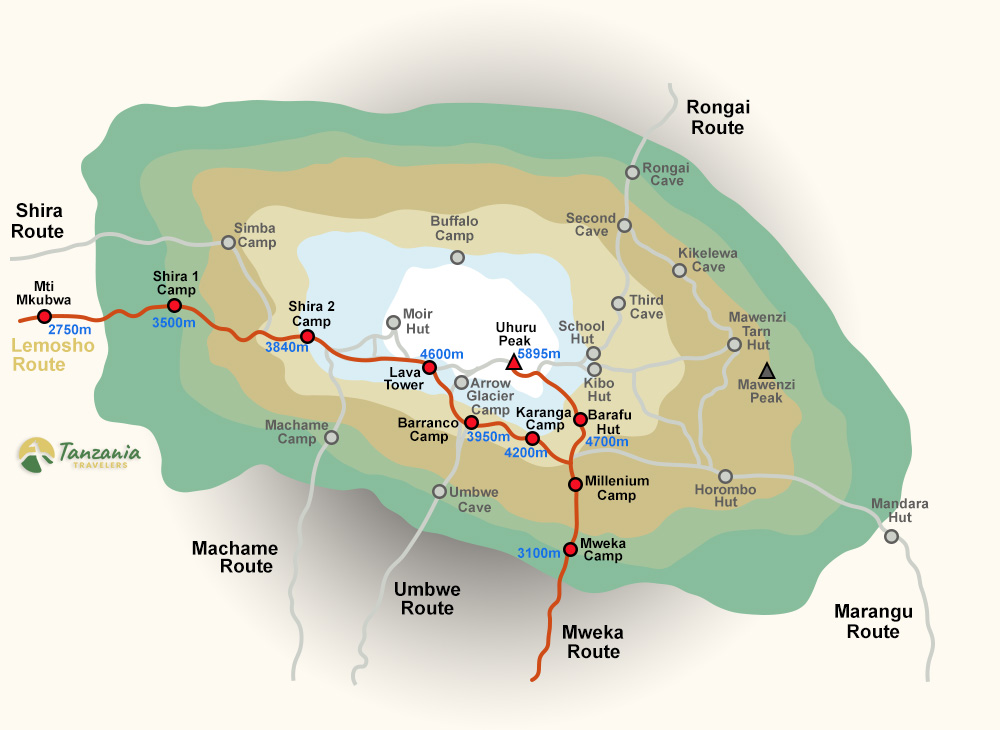
Trail map
A stylised overview of the Lemosho Route, camps, elevations and summit approach.
Elevation profile
Night-by-night altitude on the Lemosho Route, the shape of the climb, camp by camp.
Route FAQs
The questions climbers ask most.
Have a question about Lemosho Route?
Send us your enquiry and a Tanzania-based expert will get back to you within 24 hours with a personalised itinerary, pricing for your group size and answers to any questions you have.
- No deposit required to receive a quote
- Free date & itinerary changes before booking
- Direct reply from a real human, never a chatbot