

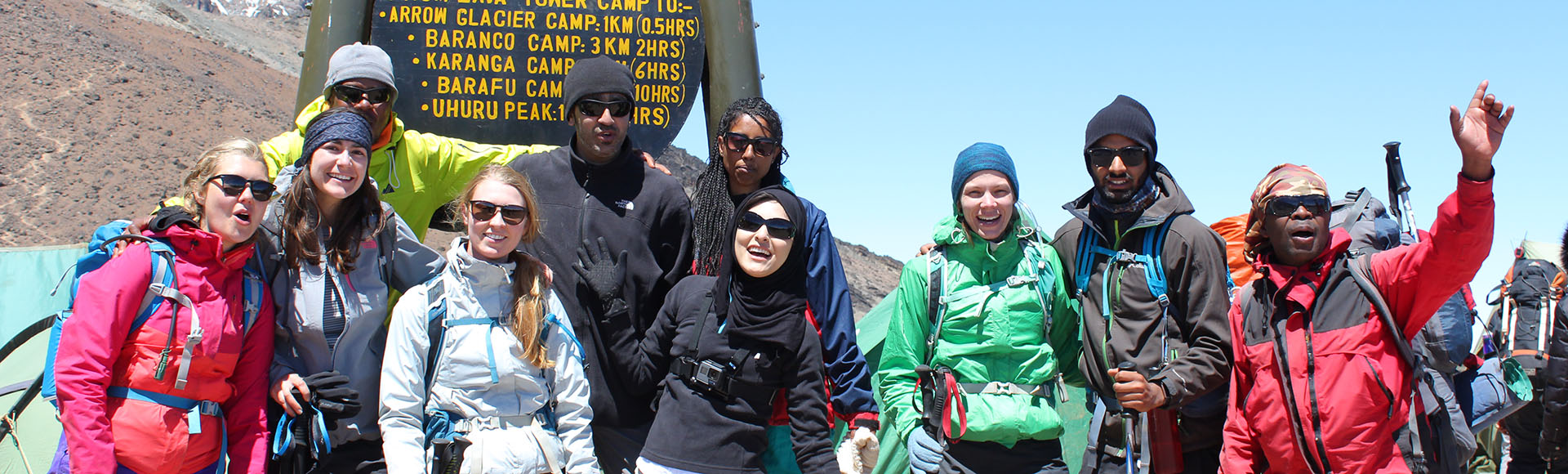
Kilimanjaro tipping guide
Exactly what our Moshi team tells climbers about tipping: how much per day, how it is split between guides, cook and porters, how much cash to bring, and how the tipping ceremony works on your last morning.
How much to tip each Kilimanjaro crew member
Tipping is customary on Kilimanjaro and should be planned in addition to your trek, travel and equipment costs. The suggested amounts below are for each crew member per day, paid by the whole climbing group, not separately by each climber. They are guidelines, not mandatory charges.
A climb depends on a large support team of guides, cooks and porters. Tips are a traditional way to thank them for their work, in addition to their wages. Even a small climbing group may have several crew members, so budgeting for tips before you travel helps avoid surprises.
| Crew role | Guideline tip | What they do |
|---|---|---|
| Senior guide | US$20–25 / day | One per climb; responsible for your safety, health checks and summit decisions. |
| Assistant guide | US$15–20 / day | One per 2–3 climbers on most routes, more on larger groups. |
| Cook | US$15–20 / day | One per climb (two on large groups); cooks three hot meals a day at altitude. |
| Waiter / camp steward | US$10–15 / day | Serves meals, washing water and hot drinks in the mess tent. |
| Porter | US$10–12 / day each | Typically 2–3 porters per climber, carrying tents, food, water and your duffel. |
| Summit porter | US$10–15 / day | Additional summit support, if included in your crew. |
| Toilet crew | US$10–15 / day | Where a private toilet and dedicated attendant are provided. |
Your actual crew size and roles can vary with your route, group size and arrangements. Ask for your crew list at the briefing before working out a final total.
Illustrative crew sizes by group
These are illustrative examples, not a guaranteed staffing list for your trek.
1 climber: 1 senior guide, 1 cook, 3–4 porters
2 climbers: 1 senior guide, 1 assistant guide, 1 cook, 7 porters
3 climbers: 1 senior guide, 1 assistant guide, 1 cook, 9 porters
4 climbers: 1 senior guide, 1 assistant guide, 1 cook, 12 porters
5 climbers: 1 senior guide, 2 assistant guides, 1 cook, 15 porters
6 climbers: 1 senior guide, 2 assistant guides, 2 cooks, 18 porters
7 climbers: 1 senior guide, 2 assistant guides, 2 cooks, 21 porters
8 climbers: 1 senior guide, 3 assistant guides, 2 cooks, 24 porters
9 climbers: 1 senior guide, 3 assistant guides, 2 cooks, 27 porters
10 climbers: 1 senior guide, 3 assistant guides, 2 cooks, 30 porters
Suggested tip per climber, by route and group size
These sample estimates are per climber, shown in your selected currency, for common route lengths and group sizes. They are illustrative, not a quote or a fixed requirement; your actual total depends on your crew list and how you choose to tip.
| Route | Group of 1 | Group of 2 | Group of 3 | Group of 4 | Group of 5 |
|---|---|---|---|---|---|
| 5 days Marangu | $325–$465 | $300–$373 | $233–$288 | $213–$261 | $215–$265 |
| 6 days Marangu | $390–$558 | $360–$447 | $280–$346 | $255–$314 | $258–$318 |
| 6 days Machame | $390–$558 | $360–$447 | $280–$346 | $255–$314 | $258–$318 |
| 7 days Machame | $455–$651 | $420–$522 | $327–$404 | $298–$366 | $301–$371 |
| 7 days Lemosho | $455–$651 | $420–$522 | $327–$404 | $298–$366 | $301–$371 |
| 8 days Lemosho | $520–$744 | $480–$596 | $373–$461 | $340–$418 | $344–$424 |
Tip totals per crew member
For calculating a group pool: each figure covers the entire trek for one person in that role, not each climber.
| Trek length | Senior guide | Assistant guide | Cook | Porter |
|---|---|---|---|---|
| 5 days | $100–$125 | $75–$100 | $75–$100 | $50–$60 |
| 6 days | $120–$150 | $90–$120 | $90–$120 | $60–$72 |
| 7 days | $140–$175 | $105–$140 | $105–$140 | $70–$84 |
| 8 days | $160–$200 | $120–$160 | $120–$160 | $80–$96 |
Bring the right cash
Withdraw or order USD before you fly. Notes must be printed 2009 or later and undamaged, older or torn notes are refused by Tanzanian banks. Split your total into 1, 5, 10 and 20 dollar notes so the pool divides cleanly, and keep it in a hotel safe in Moshi until the climb.
Tanzanian shillings & cards
Shillings and euros are accepted but less useful to the crew. There are no card machines or ATMs anywhere on the mountain, and mobile money is not an option for most porters, so cash carried up with you is the only practical route.
Beyond the tip
Gently used boots, fleeces, gloves and headtorches are genuinely valued and can be left with your guide for the crew, as an extra, never as a substitute for cash. A named review mentioning your guides also helps them directly.
How the tipping ceremony works
Before the end of the trek, collect the group's tips and agree on the amounts for each crew member. Individual envelopes allow you to hand cash directly to each person. Another option is one envelope for guides and cooks and one for porters, given to their respective representatives. Share the split clearly so everyone knows what was allocated. The exact timing and handover can be agreed with your guide.
Do
- Bring the full amount in cash before you fly, there are no ATMs on the mountain
- Use USD notes printed 2009 or later, in 1, 5, 10 and 20 denominations
- Pool tips with your group and agree the total before the last morning
- Prepare individual envelopes or separate envelopes for guides and porters
- Make the group total and the per-role split clear to the crew
- Add a personal thank-you to anyone who went out of their way for you
Avoid
- Do not leave any crew member out of the agreed distribution
- Do not promise tips in exchange for carrying extra weight
- Do not hand over torn, marked or pre-2009 US notes
- Do not give gear instead of cash unless it is on top of the tip
- Do not leave tipping to the airport transfer — the ceremony is on the mountain
- Do not feel pressured beyond the guideline range
Fair wages first, your tip is a bonus, not a wage
As a KPAP Partner company and TATO member, our porters are paid proper wages before any tip is counted, carry no more than the 20 kg park limit (of which 15 kg is your duffel), eat three cooked meals a day on the mountain and are equipped with sleeping bags, jackets and boots. Tips are handed over in front of the whole crew and reach them in full, the office takes no cut. That is the practical difference between a tip that tops up an underpaid wage and a tip that thanks a fairly paid professional.
Kilimanjaro tipping FAQs
How much should I tip on Kilimanjaro?
The amount depends on your route length and group size. As an illustration, the reference guideline for a 7-day Lemosho trek is US$364–490 for a solo climber, US$291–420 per climber in a group of two, and US$202–322 per climber in a group of five. These are planning ranges, not fixed charges. Check the actual crew list before dividing the group total.
How much do you tip each Kilimanjaro crew member?
Suggested daily amounts from the reference are US$20–25 for a senior guide, US$15–20 for an assistant guide, US$15–20 for a cook, US$10–15 for a waiter, US$10–12 for a porter, and US$10–15 for a summit porter. Each amount is for that crew member from the whole group, not from each climber separately. Confirm the crew list and roles before calculating.
Should I tip in US dollars or Tanzanian shillings?
US dollars are the easiest and most appreciated. Bring clean notes printed in 2009 or later in small denominations (USD 1, 5, 10 and 20) so the crew can split the pool fairly. Tanzanian shillings and euros are also accepted, but avoid coins and torn notes, banks in Moshi will not change them.
Is tipping on Kilimanjaro mandatory?
It is not legally mandatory and it is never taken from your climb price, but it is a firmly established custom and a meaningful part of the crew's income. Every reputable operator on the mountain, including us, budgets for it and briefs climbers on it before departure.
When and how do I hand over the tips?
Collect tips from your climbing group and divide them across the crew. You can prepare individual envelopes so each person receives their share directly, or separate envelopes for guides and cooks and for porters, handed to their representatives. Agree on the split and make it transparent to the crew.
Do I still tip if I do not reach the summit?
Plan for tips for the days your crew worked, even if you did not reach the summit. A turnaround can be due to altitude sickness or weather rather than the quality of service. If your care fell short, tip what you consider fair and share specific feedback with us.
What is KPAP and why does it matter for tipping?
The Kilimanjaro Porters Assistance Project monitors porter wages, meals, gear and loads on the mountain. As a KPAP Partner company, our porters are paid proper wages before any tip, carry no more than 20 kg, and receive tips in full with no deductions by the office, so your tip is genuinely a bonus, not a wage top-up.
How much do you tip a safari or day-tour guide in Tanzania?
For a private northern-circuit safari, USD 20–25 per vehicle per day for the driver-guide is standard, plus USD 5–10 per group per day for lodge and camp staff tip boxes. On day tours from Moshi, USD 10–15 per group for the driver-guide is a fair thank-you.
Why is tipping not included in the trek price?
On Kilimanjaro, tipping is traditionally a direct, discretionary thank-you from climbers to the crew. Keeping it separate lets you decide what is fair based on service and lets the crew receive the amount you choose. Budget for it alongside the trek price, travel and equipment costs.
Can I tip higher or lower than the suggested amount?
Yes. The ranges are guidelines, not obligations. You may tip toward the top of the range for exceptional service or choose an amount you feel is fair if the service did not meet expectations. Please share specific concerns with us so they can be addressed.
Can I prepay the tips?
Plan to give tips directly to the crew in cash rather than assuming you can include them in your trek payment. If carrying cash is difficult, ask our team what arrangements are available before you travel.
Can I leave the tip money with a briefing manager?
Ask our team at your briefing before leaving tip money with anyone. If a holding arrangement is available, request a written receipt and agree on when you will collect and distribute the funds to the crew.
Planning your climb?
Compare Lemosho, Machame, Marangu and Rongai, itineraries, prices and summit success rates, and we will send you a written tipping breakdown with your crew list.
Rest and acclimatisation days around Moshi
Arriving early or resting after your climb? These short trips from Moshi pair well with a Kilimanjaro itinerary.
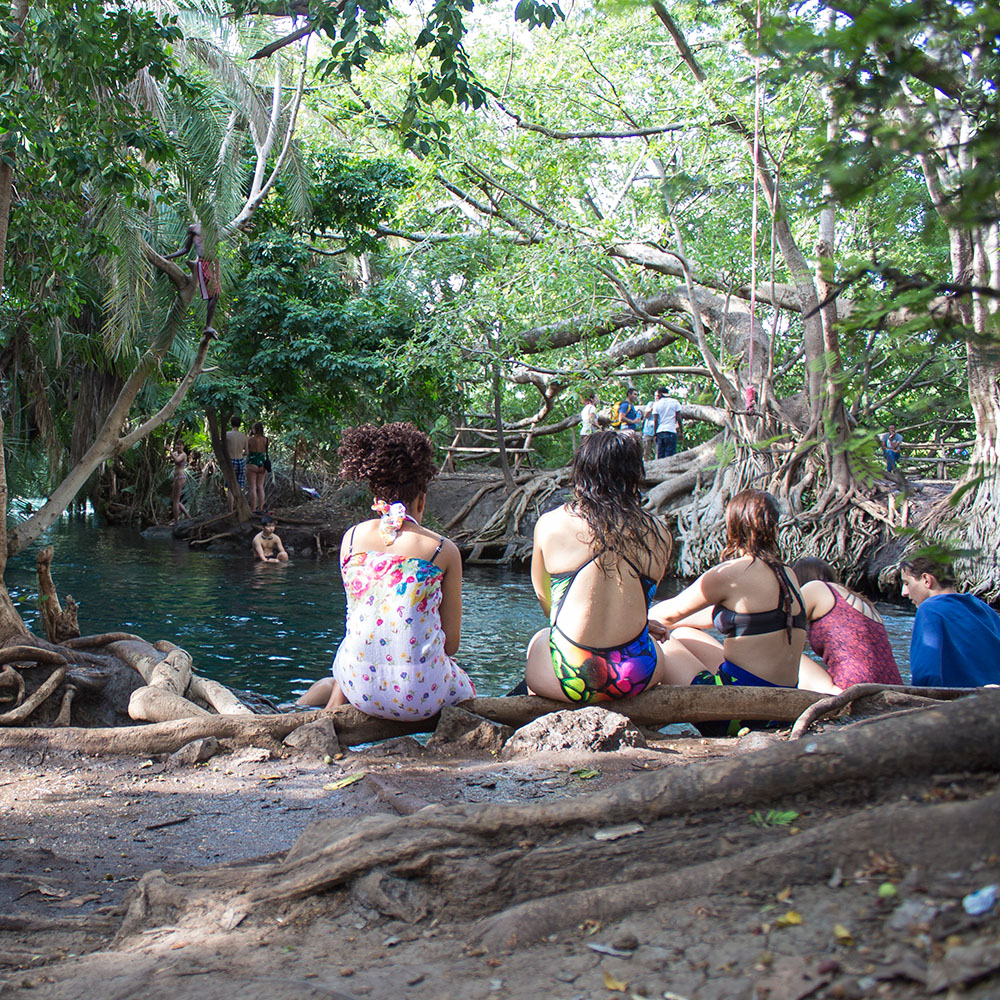
Kikuletwa Hot Springs
Turquoise spring-fed pools in a palm oasis
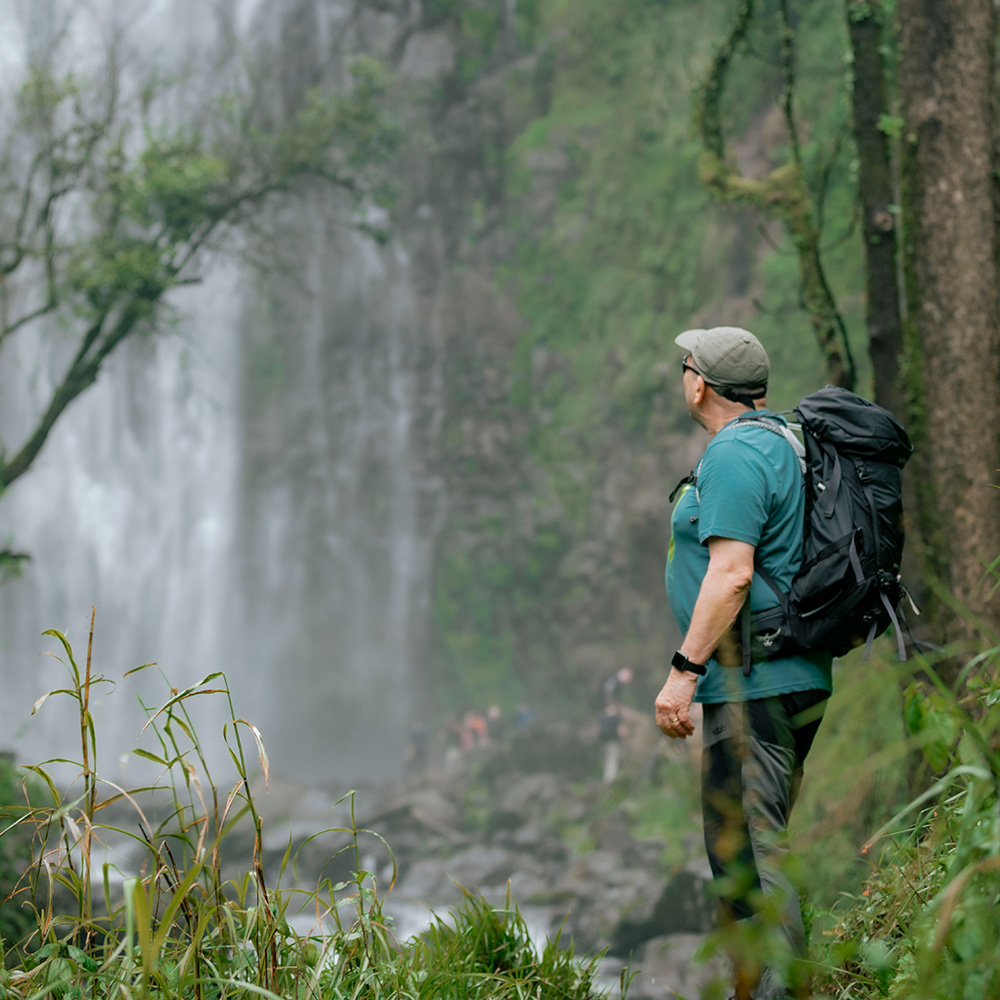
Materuni Waterfalls & Coffee
A Chagga village, a 80 m waterfall and coffee you roast yourself
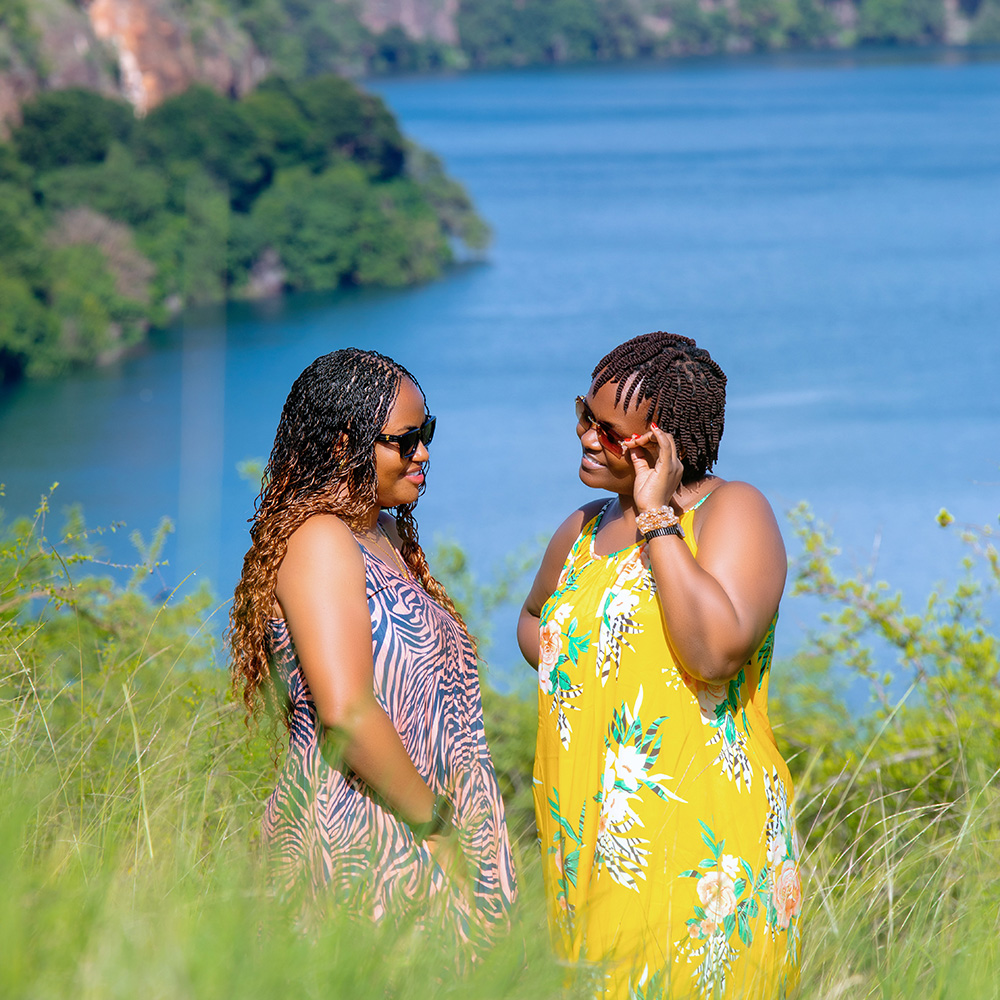
Lake Chala
A crater lake on the Kenya border, turquoise and quiet