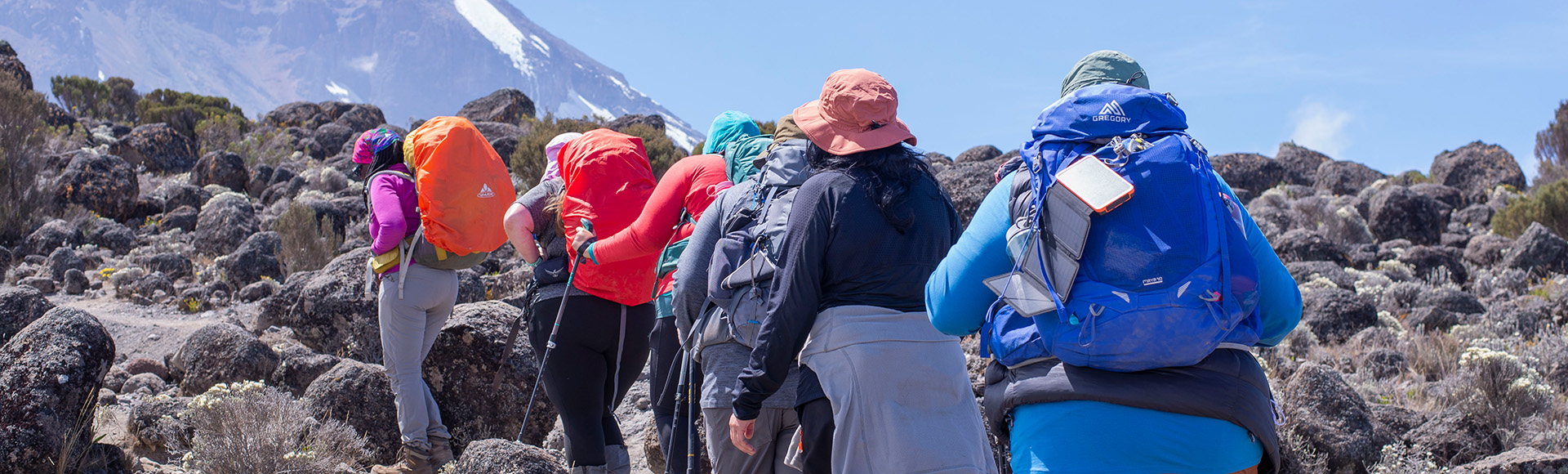
Kilimanjaro can be climbed all year, but two dry windows give the safest trails, the clearest views and the highest summit success rates: January to mid-March, and June to October.
Dry trails, clear skies and the highest summit success rates. These windows also give the most reliable flight schedules in and out of Kilimanjaro International Airport.
Rainy season
Mar – May · Nov
The long rains are best avoided unless you are experienced and flexible. The short rains in November are more manageable and come with lower prices and fewer crowds.
Highest success
8-day Lemosho
Route length matters more than the month. Our 8-day Lemosho climbs summit at 97–98 %, while the average 5-day Marangu climb sits near 50 % park-wide.
Year at a glance
Best Shoulder Avoid
JanFebMarAprMayJunJulAugSepOctNovDec
Month-by-month guide
When to climb Kilimanjaro, season by season
The mountain sits three degrees south of the equator, so temperature changes little across the year. What changes is rainfall, cloud and crowd density. Pick your month for the weather, not the thermometer.
Best timeJanuary – mid March
Warm, quiet and clear, the best photography window
Mostly dry, warm days, clear mornings; occasional afternoon snow high on the mountain.
Crowds:Moderate, quieter than the main June–October rush.
Success rate:Very high, stable conditions and good acclimatisation weather.
Recommended routes:Lemosho 8 days, Machame 7 days, Rongai 7 days
Guide note: Cloudless mornings give the best views of Mawenzi. Light snow on the summit makes for dramatic photos; bring warm gloves.
AvoidMid March – May
The long rains, wet trails and low visibility
Daily rain in the rainforest, mud on the lower trails, heavy cloud and drizzle at altitude.
Crowds:Very low, few operators run full schedules.
Success rate:Lower, slippery ground, damp kit and reduced visibility affect morale and safety.
Recommended routes:Rongai 6 or 7 days (drier northern approach), or avoid unless experienced
Guide note: Some operators discount heavily. If you must climb, Rongai sits in the northern rain shadow and is the least wet option.
Best timeJune – October
The main dry season, cold but reliable
Dry, cold nights, very stable skies. Summit-night wind chill can reach −20 °C.
Crowds:High, peak season, especially July–September.
Success rate:Very high, firm trails and clear skies are the ideal combination.
January, February, September and October are the stand-out months in our experience: dry, clear and with the highest summit-success rates. June to August are also excellent but busier and colder.
Can you climb Kilimanjaro during the rainy season?
You can, but it is harder. Mid-March through May is the long-rain season: muddy rainforest trails, wet kit and heavy cloud. November brings short, afternoon showers and is more manageable, especially on the northern Rongai route.
Which route is best in the rainy season?
Rongai is the best rainy-season choice because it approaches from the drier north, in the rain shadow of the mountain. Adding an extra acclimatisation day also helps when conditions are tougher.
How cold does Kilimanjaro get by month?
Temperature at the summit is dictated by altitude, not the calendar. Expect −7 °C to −18 °C on summit night before wind chill, year-round. June–August nights feel colder because the air is drier; January–March nights are milder but still below freezing at Barafu.
Should I summit on a full moon?
A full-moon summit gives enough natural light to reduce head-torch dependence and lights up the glaciers. Those dates are the first to book out, tell us early if you want one and we will time your itinerary so summit night falls within two days of the full moon.
How far in advance should I book my climb?
For June–October and the festive season, book three to six months ahead. For January–March and the shoulder months, six to eight weeks is usually enough. Full-moon dates add two to three months to those lead times.
Day trips from Moshi
Rest and acclimatisation days around Moshi
Arriving early or resting after your climb? These short trips from Moshi pair well with a Kilimanjaro itinerary.