Tanzania Travelers
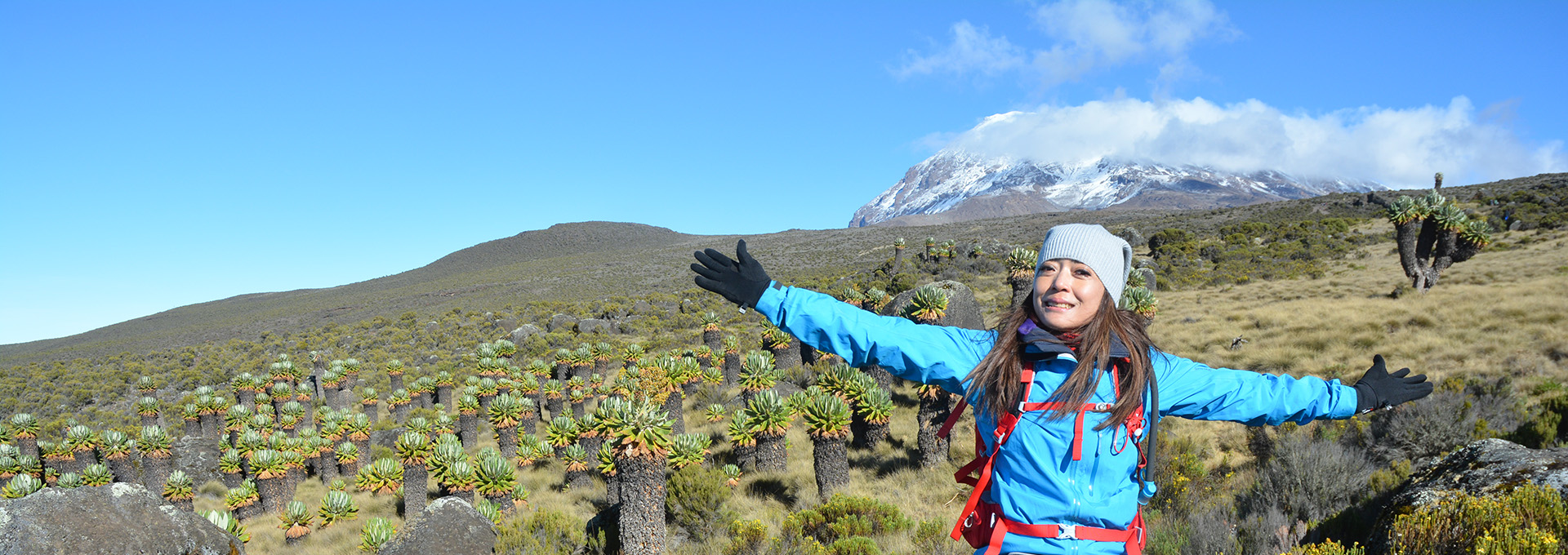
Mount Kilimanjaro rising above the clouds
Four routes · 5,895 m

Kilimanjaro routes compared

Lemosho, Machame, Rongai and Marangu — success rates, crowds, huts versus tents, terrain and price, so you can pick the route that actually suits you.

97% on 8-day Lemosho
Our highest summit success rate
Private climbs
Your own guides, cook and crew
Tents or huts
Marangu is the only hut route
All four gates
West, south, north and south-east approaches
Side by side

The four main Kilimanjaro routes

Success rates below are ours, for climbers on the longer itinerary of each route. Prices are the lowest published per-person rate for two climbers.

RouteDaysSuccessTrafficSleepingApproachFrom
Lemosho Route
The Scenic Route
7 or 8 days97%Very lowTentsWestUSD 2,200
Machame Route
The Whiskey Route
6 or 7 days92%HighTentsSouthUSD 1,880
Rongai Route
The Northern Route
6 or 7 days90%LowTentsNorthUSD 1,890
Marangu Route
The Coca-Cola Route
5 or 6 days85%Very highHutsSouth-eastUSD 1,850

What each route is actually like

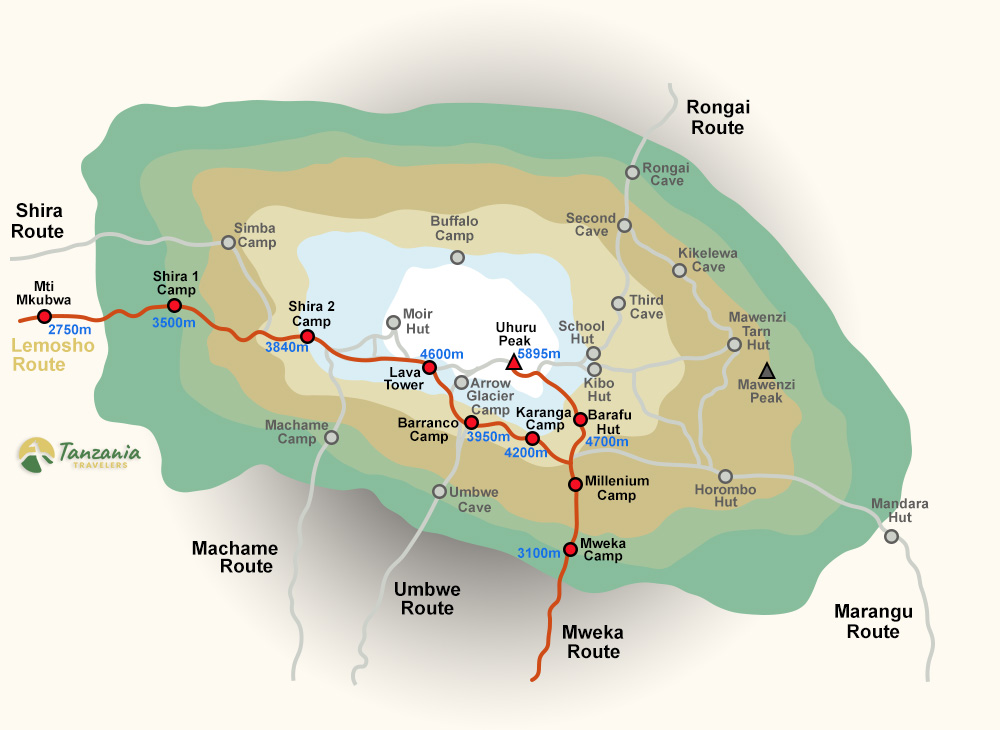
Lemosho Route trail map on Kilimanjaro

Lemosho Route

The most beautiful — and most successful — way up Kilimanjaro.

97%

Approaches Kilimanjaro from the quiet west, crossing the Shira Plateau and joining the Southern Circuit for the summit push. Long, gradual acclimatisation and huge summit-day success rates.

Best for
First-time high-altitude climbers who want the best chance of success.
Difficulty
Moderate
Scenery
Exceptional — rainforest, plateau, alpine desert, glaciers
Crowds
Quiet on days 1–3, busier from Barranco onward
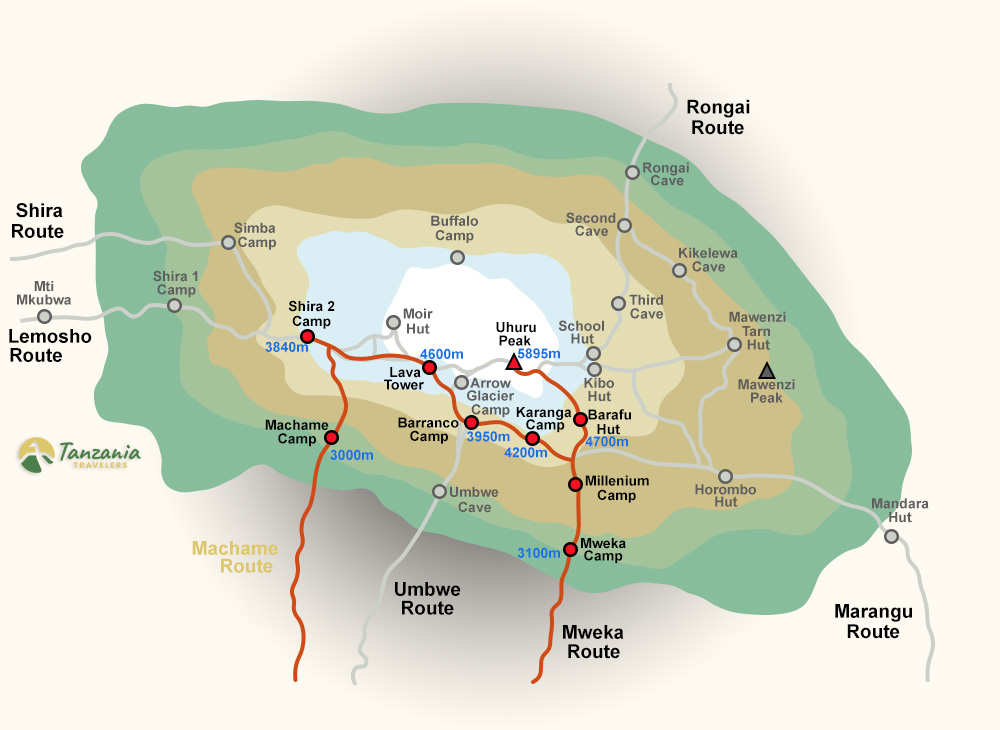
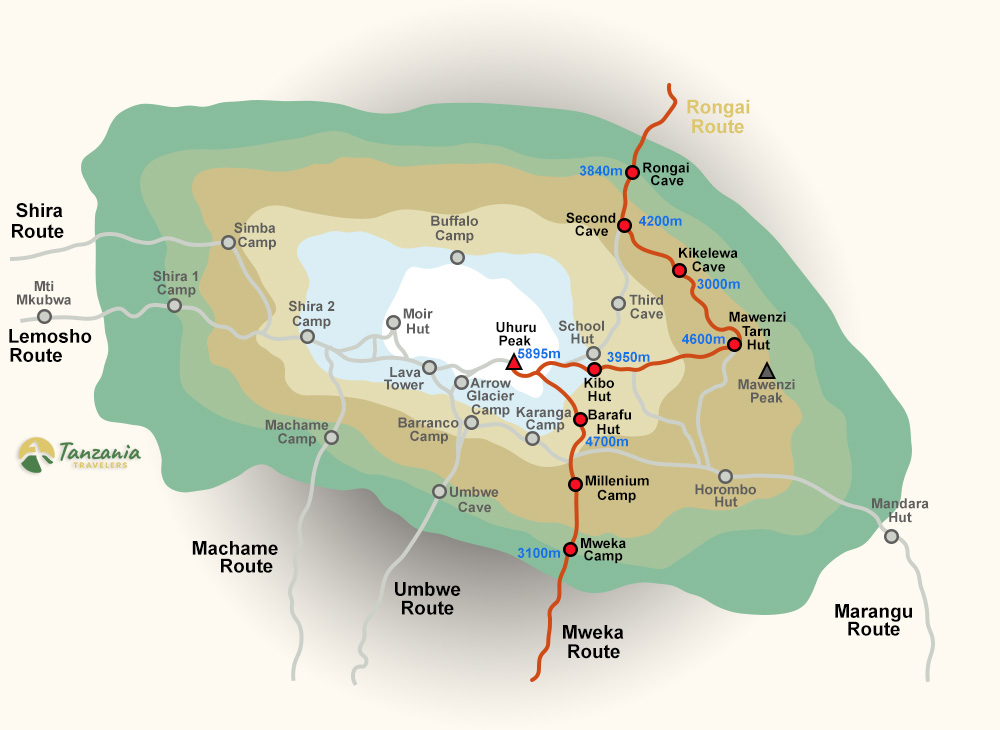
Machame Route trail map on Kilimanjaro

Machame Route

Steeper, wilder, more dramatic — Kilimanjaro's climber's route.

92%

Approaches from the south and crosses to the west before curving back for a southern summit push. Steeper daily gain than Marangu, but excellent scenery and a great built-in acclimatisation profile.

Best for
Fit trekkers with prior multi-day hiking experience.
Difficulty
Challenging
Scenery
Superb — five climate zones, the iconic Barranco Wall
Crowds
Popular — the busiest camping route
Rongai Route trail map on Kilimanjaro

Rongai Route

The quiet northern approach — drier, wilder, less trafficked.

90%

The only route that approaches Kilimanjaro from the north, near the Kenyan border. Drier weather, fewer climbers, and better chances of wildlife sightings in the lower forest zones.

Best for
Climbers who value solitude and want a drier alternative in shoulder seasons.
Difficulty
Moderate
Scenery
Remote — northern wilderness, Mawenzi views, alpine desert
Crowds
Very quiet — the least-trafficked main route
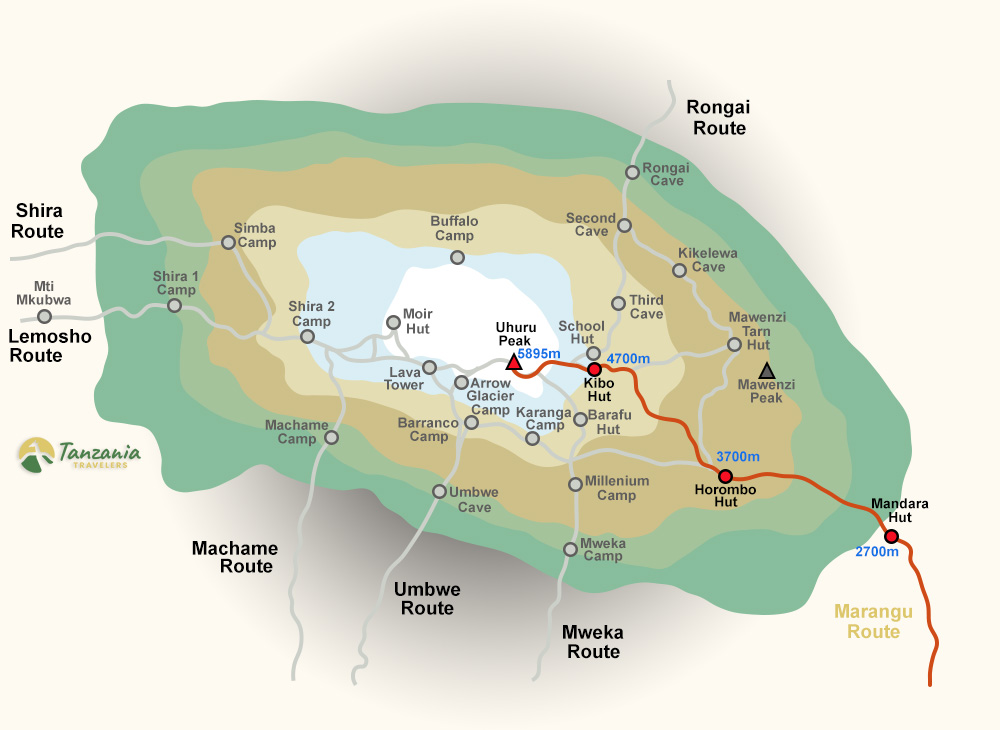
Marangu Route trail map on Kilimanjaro

Marangu Route

The only route with permanent mountain huts — no tents required.

85%

The oldest and most established route. Ascends and descends on the same trail from the south-east. Sleeping is in shared dormitory-style huts with bunks and mattresses.

Best for
Climbers who prefer huts to tents, or want the shortest possible itinerary.
Difficulty
Moderate
Scenery
Good — rainforest, moorland, the stark Saddle
Crowds
Busy — the most-trafficked route

How to choose your route

  • Best odds of summiting — 8-day Lemosho, the longest acclimatisation profile we run.
  • Fit and experienced, wanting drama — 7-day Machame with the Barranco Wall.
  • Solitude and drier weather — Rongai, the only northern approach.
  • Huts instead of tents, or the shortest trip — Marangu, with the lowest success rate as the trade-off.

Not sure which route fits you?

Answer three quick questions about your hiking experience, how many days you have and what matters most to you, and we will point you at the route our guides would put you on.

Kilimanjaro route questions

Which Kilimanjaro route has the highest success rate?

Lemosho. Its long, gradual western approach gives you the most acclimatisation days before summit night, and our climbers on the 8-day Lemosho itinerary summit at around 97%. Machame follows at about 92%, Rongai around 90% and Marangu — the shortest and steepest-profiled route — about 85%.

Which Kilimanjaro route is the easiest?

There is no easy route to 5,895 m, but Marangu has the gentlest terrain and is the only route with permanent huts, so you sleep on a bunk rather than in a tent. It is also the shortest, which is why its success rate is the lowest. Rongai has an easier daily gradient than Machame and far fewer climbers.

How many days should I climb Kilimanjaro in?

Seven or eight days. Each extra night above 3,000 m materially improves your chance of reaching Uhuru Peak and reduces the risk of altitude sickness. Five and six day itineraries are possible and cheaper, but they compress acclimatisation into fewer nights.

Which route is best for scenery?

Lemosho and Machame. Both cross the Shira Plateau or the Barranco Wall and traverse five climate zones, from rainforest to arctic summit. Rongai is the most remote and offers close views of Mawenzi peak; Marangu ascends and descends the same trail, so you see the least variety.

Which Kilimanjaro route is the quietest?

Rongai, the only northern approach, sees the fewest climbers of the main routes. Lemosho is also very quiet for its first three days before joining the Southern Circuit at Barranco.

Does the route affect the price?

Yes. Longer routes need more park camping fees, food and crew days, so an 8-day Lemosho costs more than a 6-day Marangu. Park fees are set by TANAPA and are identical for every operator, so a much cheaper quote usually means fewer days, a bigger group or a smaller crew.